The Cod and Jackfruit Chronicles

17 December 2017

[Above not-still life:  Children frolicking in the bay at Cape Maclear, Malawi]

As an analyst, I generally refrain from giving advice to patients, figuring that I have enough difficulty making my own best choices, let alone those of others. So I assist them in arriving at their own decisions.  But I’m departing from that posture now, as I have just opened a too-green jackfruit.

On YouTube, the videos regarding jackfruit make them seem irresistible, like a young beauty contestant for DT or a teenage girl for Roy Moore.  Oil your knife blade to keep the latex from sticking to it, slice it open, eat the delicious yellow fruit and roast the seeds, to be eaten like chestnuts. Um hm.

I think the one I bought at the roadside stand was picked too green. What a disaster! Jackfruit are big, up to 150#, larger than durian. Ours was about 8#, 18” long and 8” in diameter, the runt of the litter. It began to rot at one end 4 days after purchase. It did get a bit soft in the middle and there was a faint fruity aroma surrounding the skin, so Linda suggested that I needed to do more than admire and fantasize about it.  This morning I oiled a carving knife and cut in. Latex, incredibly sticky goop only slightly dissolved by nail polish remover (I later discovered), oozed out at an alarming rate. There were no yellow fruit pods inside; it was all a pretty, creamy white. The pods tasted like nothing. The seeds looked, well, seedy. Conclusion and advice, after spending considerable time cleaning up my knife, the cutting board, the sink, and my hands, I suggest you pick your own from the tree or buy them later in the season.  I’ll try again but not immediately.

We are now at the end of a 4 days stay at Cape Maclear, the site of David Livingston’s first mission and in the ‘80’s a major hippie backpacker destination. It is a fishing village stretched along a lovely sand beach and backed by lushly forested hills dotted with huge granite boulders. The beach is on the west side of a long peninsula sticking north into Lake Malawi from the latter’s southern tip. Perhaps it would be best to google it!  We are staying at a somewhat up-market resort, tucked into the rocks at the northeastern-most edge of the village. We have a little thatched chalet with a porch in front looking over the beach, the lake, and Domwe and Mumbo islands. They know how to cook fish here, and it is delicious, but you don’t come here for the food, otherwise. Good quality but dull.  Vietnam, Thailand, and most of Asia (Philippine food lacks the imagination of its neighbors), as well as Europe, are food destinations.  OK, Berkeley, too.

There is hiking and all manner of kayaking, sailing, snorkeling, scuba diving, etc. Lake Malawi has more species of fish than all of Europe and North America combined. Some 850 fish species! Many are cichlids, brightly colored and highly diverse.  Some raise their eggs, and subsequent fry, in their mouths for protection. One group has a niche of poaching eggs and fry from the mouths of others, a gruesome occupation. Birds and birdsong are everywhere. Many of our regular friends, like hammerkop and reed cormorants and brimstone canaries. Swallows dart in a gyre over the beach at sunrise and sunset, consuming insects. I watched a black-capped bulbul struggle to eat an immense bug. It got the wings off and finally lined it up, swallowing it whole. Poor bug’s mother! If the wild birds aren’t enough, the owner has two gorgeous but noisy macaws in a large cage nearby, squawking in daylight only, thankfully. And two foot long monitor lizards and rainbow skinks crawling all over the granite. Lots of life.

There is a long section of the beach devoted to fish-drying racks and the perfume wafts through the little village.  Some fishermen paddle off in their small log canoes (The tumble-home is so great I wonder how they hollowed them!) to fish during the day, some pull nets into the beach nearby, but most charge up batteries with solar panels, load their canoes onto larger outboard-powered boats and go deep to fish all night. The batteries power floodlights that attract the fish, a technique done in SE Asia, the Mediterranean, and wherever there are photophilic fish, I guess. The point is that at night you see the points of light, stretched out like a necklace, a few miles off-shore. It looks magical and I suppose it is until bad weather.

The lodge owner had a crew build a brick-lined concrete-finished trough from the dining room to the lake to carry runoff from storms. The 8 men miraculously completed it in a day and that evening a huge downpour, the first of the season here, washed all the concrete away into the lake. Plus, the trough wasn’t nearly large enough. So they built a newer, larger version yesterday; it didn’t pour, and the concrete is no doubt curing.

Aside from a painful kayak trip—I don’t have the core muscles to use a sit-on-top kayak—and a vigorous hike up a peak in the National Park yesterday, we’ve relaxed into the place, and into each other. We are refreshed enough to return to Blantyre and work for two days before heading to Chitipe and Karonga in the north for two weeks.

Our work can feel fascinating, can make us feel incredible despair and rage, and we can also feel helpful. Hope for the future is harder to come by and the lack of funds in the system and corruption/bureaucratic sludge is very dispiriting. We sense–we don’t know for certain—that PEPVAR, Peace Corps, and our GHSP teaching program are all threatened by the fools in Washington.  Yesterday Linda read that the CDC has been instructed not to use certain words, like “evidence-based”, “entitlement”, “vulnerable”, and “fetus”. This is 1984-style mind-control, folks. Next the history books will be re-written. Wait, that has already happened in Texas and Kansas re. Intelligent Design vs. Evolution. Keep your TV’s off!

On the micro-hedonistic level, I cannot wait to return to Blantyre for Linda’s cooking and to make smoothies with homemade yoghurt and mangos from our trees.

Time has really stopped here. Huge clouds have massed over the Mozambique (east) side of the lake. Cape Maclear, facing west, is famous for glorious sunsets. Most of lake-side Malawi faces east. Nature is so incredibly diverse, resilient, and beautiful if we could just stop mucking with it. I recently read that there are 8 long-line trawlers on Lake Malawi, doing to it what we did to the Grand and George’s Banks. Where have all the codfish gone? Gone to chowder every one. When will we ever learn? When will we ever learn?
 

Only 15 Shopping Days Left Until Christmas!

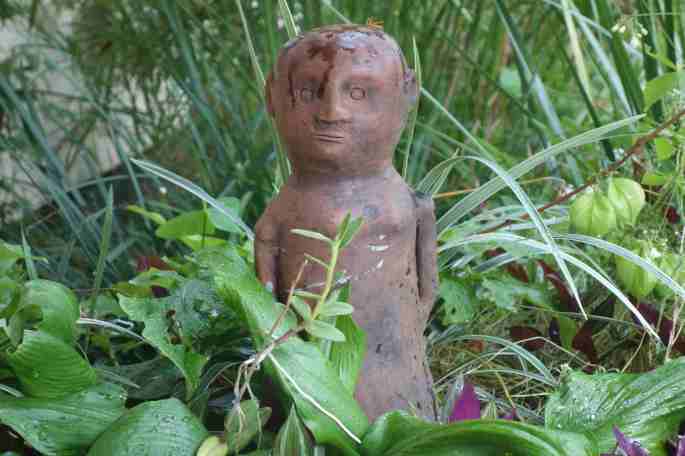
[Above photo: Our new garden gnome, with a bit of rain on her head, looking puzzled.]

10 December 2017

It is remarkable to have the pressure of buying gifts off of me. I drove to Zomba to evaluate a very prominent Malawian figure who has been moved from prison to Zomba Mental Hospital with the idea that he is “mad”.  We wanted to make a weekend of it and stay at the Forestry Lodge, which reportedly has great food, and hike on the Zomba Plateau. Not yet cleared by PC.   “Mad” doesn’t mean angry here; it means crazy. After the evaluation—and I don’t believe he is crazy, crazy, just ill-advised by his personality disorder to behave in an entitled and reckless manner—I went for lunch to African Heritage, a cute outdoor restaurant that serves great wraps and salad. They also have a gift shop and I bought Linda a bracelet which is beyond my ability to describe with words. It is like a thick shaving from a carpenter’s plane of a very dense, dark hardwood with some fenestrations cut into it. See, I told you I couldn’t adequately describe it. The point is, she loves it, or at least says she does.

Midway on the hour-long return drive to Blantyre are a few pottery shops. One has fantastic, simple, unglazed statues, from 14’ to 20’ high, of people and heads of the same material. We have a collection of 7 on one of the chests in the living room and they feel a bit like a very quiet children’s choir. I bought a larger woman with a quizzical look and I also bought a head, as well as an unglazed bowl. Linda was very happy. It wasn’t Christmas but I so much prefer buying something when there is something I want to give, rather than aiming for a Hallmark date.

We have both hit the wall and need to vacate in the worst way. I’ve been so exhausted that we both wondered if my lung cancer had returned—coming home from work and going right to bed on one occasion.  This weekend has been very relaxed and I’m feeling better. Cape Maclear is a lovely spot, by all accounts, on the lake and has been favorably screened by PC.  We’re heading there for 2 1/2 days in less than a week. Then, three days after returning we’ll pack up and head North—“heading North to Alaska, going North, the rush is on”—remember that song from the 50’s? Along with “Mule Train”. A disk jockey in Seattle allegedly locked himself in the studio and played Mule Train continuously, with some commentary, for 24 hours straight. Maybe Beethoven’s 9th Symphony or a late string quartet but I think you’d get to the meat and bone and marrow of Mule Train pretty quickly. Like eating a potato chip—a crisp, as the Brits say.

Anyway, we’ll head to the north of Malawi for 2 ½ weeks, up against the border with Tanzania, and visit interesting and beautiful spots all along the way. It’s a shake-down for us and the car before our two month sojourn to Namibia next summer.

I saw a girl well known to us, a teen by the name of “Funny”. She has Down Syndrome, had meningitis at 3yo, has little language, and appears to have some sort of organic psychosis going on. The name could not be less appropriate but I suppose it was given at birth, before this cascade of tragedy tumbled down on the family. I admire the mothers of learning disabled (Brit-speak for developmentally delayed or mentally retarded) kids so much when they manage it with love and patience. They can get a lot more from their kids by doing that. It seems impossibly difficult to me that they can, given the poverty, demands, and 5 other children to clothe, feed, supervise, and love. Single mothers have always amazed and inspired me, not that I can hope to seriously emulate them. I doubt I’d be that strong. Women, being the carriers and carers of the future of the species, are physiologically superior to men, I believe. Men may be larger, more muscular, and faster but women live longer, apparently do very well in Space, and generally are the glue in a family. I guess we complement each other. I certainly compliment Linda a lot on her superior cooking!

We’ll have supper with friends tonight. The sky is growling and intermittently cries. It feels to me like it has a thorn in its paw. The rain is so good for Malawi. It is turning into an emerald world, hiding the ubiquitous little blue sapphires (plastic bags) that everyone tosses aside after eating their chips or whatever was in them. The grass grows and they vanish from sight.

I was thinking of unhappiness. It is easy to be unhappy in a wealthy country, even if you are wealthy or if there is a safety net to keep you going. Understandably. But when I see people who are often quite happy despite having an LD child, dire poverty, no education, often an AIDS-deceased spouse, and few prospects that the conditions of their life will improve, it is confusing.  I suppose, other than a war or frank starvation or an epidemic, happiness depends on how you feel about yourself and how your relationships are with others. Accomplishments, good health, freedom from financial worry or political persecution, a nice trip, or a new possession can add a bit but even very accomplished, healthy, wealthy, travelled people living in freedom who buy whatever they want are often miserable. How hard we chase the $ in the US, working ourselves to the bone!  This new federal tax bill is going to add to most people’s struggle, more rocks in the backpack. It is wrong and some people will die because of it, not being able to afford health care or a new tire for that bald one on the left rear. I think when poverty crushes the social fabric, as it hasn’t so much here but has, and shall, in the US a lot, then relationships fall apart and misery sets in. I am rambling here, with Chimwemwe pushing the lawn mower in between cloudbursts as background noise.

I must stop, a sign of my burn-out. A meagre offering to those of you who read this. Oh, I can suggest a well-written and entertaining book, The Brave Are Forgiven by Chris Cleave, about WW2 Britain. So witty and well-drawn. I’ll pay a bit more attention this week to my outer world, since I’m rested and the week won’t be tough, so that I can write more of general interest next week. Funny, this started as a diary but now I am hearing from people I don’t know who read it. How does that happen?

Time Travel

[Above photo: A map on Robbin Island of the West African slave trade. Malawi’s slave trade was generally from East Africa, Mozambique.]

3 December 2017

Time is a strange concept. Or at least we think of it strangely. It’s like driving in a car. You are in the car, sitting comfortably in a contoured seat, belted in hopefully, then you get out of the car in a different time and place, having just sat there. Nothing is rushing by, nor are we rushing through it. We struggle to live in the moment, we overworked Americans, always thinking about the next paving stone on which we’ll step, but never realizing it because as our foot hits it we are already thinking ahead to the next. I’m getting out of my depth here—I’ll leave it to Einstein and Stephen Hawking to finish this paragraph. Let me just note how pleasantly jarring it was to receive an email from Harold, traveling on the BART to Berkeley from San Francisco with his sister Ellen, having had supper with Stephen Arkin at an Indian restaurant in the City. All our lives have been intertwined in various ways since 1962 and Harold and Ellen are hurtling down the tracks underneath the Bay, Stephen has likely walked to his home on 5th Avenue, and I am sitting on a couch in our cottage in Blantyre, Malawi and we are practically talking. And, no, I have not been smoking the local herb. I’m sitting up in bed and it is 6:44AM Sunday.

I really hit the wall this week. I worked much too hard, too many hours—-and I mean starting at 7:30 or 8 AM and working straight through until 5 or 5:30, no lunch, rushing from QECH on my bike to COM and, later, back again. I bowed out of an evening meeting, exhausted. Curiously, I don’t think I would have felt much less exhausted 30 or 40 years ago. My recovery time would have been shorter, though.

In part it had to do with a 31 yo woman I saw in Room 6 with the medical students. She was there with her mother. She is a primary school teacher in a rural district, Chikwawa.  She had delivered a baby three months previously and had been acting strangely since returning home from the hospital.  She had no interest in the baby, refused to nurse it, and began talking to herself and refusing to eat. Her mother, sadly, didn’t bring her to the local clinic, perhaps feeling with hopeless resignation that this was just yet another disaster in a life filled with them. In any case, 5 days before coming to see us she killed her baby. I’ll not put the images of how she did this in your head, despite my vicariously traumatized Self feeling a pressure to do so, to futilely attempt to get it out of my mind. When we saw her she was mute, had made no efforts to harm herself, was staring fearfully, uncomprehending, and was flagrantly psychotic. We treat many acutely psychotic patients as outpatients with frequent follow-up.  I can only think I was so horrified by it all that a bit of my judgment left me. I was aware that she would likely be at very high risk of suicide when she improved and could form coherent thoughts.  Anyway, I talked about it with Linda that evening and she was surprised I hadn’t hospitalized her. And hadn’t called the police. I slept poorly, my best guide to whether a potentially suicidal patient should be in hospital, and returned to Room 6 the next day to retrieve the mother’s phone number. I called her twice, saying that she needed to bring her daughter in to be hospitalized at Zomba Mental Hospital. She refused: “She’s getting better.”  I upped the ante, saying her daughter had killed the baby and unless she brought her in I’d be forced to send the police for her. And that would be much more unpleasant for her daughter. No dice. I asked one of the nurses to call her and do it all over again in Chichewa. Nope. I was about to call the police when I gave her a last try and this time she agreed to bring her daughter in. And did, as was confirmed in the early afternoon. I am assuming she was hospitalized, as I was teaching and couldn’t f/u with the nurses, but they know what to do.

I don’t know how I made that lapse. Thankfully no major harm was done. I’ll call the police and report it on Monday. They’ll likely be grateful for not having to book her, etc. I was stunned by the horror of it. I also was pressed for time, as we are short-handed teaching the students and I needed to give a lecture at the COM shortly.  In describing this to the students later, I pointed out how we all will make mistakes, despite our best intentions, and the second most important thing is to face them and talk about them and learn from them. My fear that in doing so I’ll be unmasked as really incompetent—“You didn’t hospitalize her? What were you thinking, idiot?!”—was easily outweighed by my need to demonstrate the above conviction.

In Medicine, our best diagnosis (management plan, etc.) is only as good as our last one.  Brilliance or compassion on Monday is erased in an instant by thick-headedness or insensitivity on Tuesday. If a significant part of your self-esteem is pinned to your job performance and you lean toward guilt and self-blame, it leaves you pretty vulnerable, since there is information we cannot know, variables we cannot control, states of our own mind (rushed, horrified) of which we may be unaware and which modify our senses and judgment.  Being a physician is a risky business, if taken seriously, because the stakes are so high—potentially harming, or failing to protect or properly help, another person who has, somehow, become your responsibility. It’s not like you double-faulted at tennis several times and lost the match or missed the mark in creating an advertisement that flopped (We are watching “Madmen”) . Often, then, the primary loser is you—and a business, perhaps—not someone else who has entrusted themself to your care.

I am excited to have started in motion a possible assist for the sustainability of the Pediatric Mental Health Clinic. I’ve asked two training directors at university medical centers to consider a 3 month rotation of senior Child Psychiatry fellows here. Global Mental Health is the Next Big Thing, given the predicted health burden of mental illness in developing countries (conservatively 15-20% of the illness burden). I’ll cast my net more widely in future days.

Doing Medicine in a developing country where resources are short, skills are sometimes poor, health care workers are stretched too thin, patients are desperately ill, and there is little system redundancy to catch errors of omission or commission, is hard. Crazily, I like the challenge, even as it exhausts me at times. And I like to see people getting better in association with our efforts.

A 28yo man from a small village with three prior hospitalizations for mania was in clinic Thursday for a review. He takes medication for his Bipolar Affective Disorder without having any side effects and it is well-controlled. He was dressed in a pressed, dark suit for our visit, accompanied by his mother as Guardian. He is a successful potter, hand-building and firing small to large pots, which he sells.  I asked if he had a wheel and he looked puzzled! He supports his wife and 2 children and his parents with his work. He looked very proud as he talked about it. I sense he lives in the moment, his moment and that of others around him. It buoyed me up, I must say. He’s a lucky one.

Thanksgiving 2017

[Above photo: Our Thanksgiving gathering]

26 November 2017

[As a preface, I realize that when I post a blog, if readers have signed up for an email alert and click on it, they receive only that post, not later, edited versions nor photos added in the middle of the night when there is enough band-width on the net to upload them. The photos are often the best part of the blog, so I’ll try to send everything at once from now on. Or you can simply check apsychiatristinmalawi.com for the latest iteration.]

We hosted 12 others for Thanksgiving supper. Some were new Peace Corps Response vols, some GHSP vols like us, and others were friends from Malawi or Scottish psychiatrists (3) here to help with the medical student teaching for 3-6 week stretches.

The oven broke—a local transformer exploded in a display of sparks and fried a couple of the oven circuits. The Blantyre distributor for Defy Appliances (S. African) had me waiting two days for his electrician, who eventually never came or called. The distributor also didn’t have the parts we needed when we finally got an electrician. What does he distribute?  George-Fixit, one of our landlady’s handymen, kept my hopes up for another day or two—“What, the electrician isn’t there yet? I think he’s very close. Let me call him.” He never showed. Or called. Finally, the guy next door, Timo, who is a S. African contractor, got his electrician, pulled out the damaged circuits, and proceeded to disappear into Ndirande, a large slum, from which he didn’t reappear until the day after Thanksgiving. Plus, Linda texted me at work at 1PM Thursday afternoon that our power was out. “Shall we all go out to supper and reschedule a party for when things are working?” “You’re kidding.” [Silence] “The pilgrims didn’t have electricity.” That woman loves a challenge and doesn’t complain about the difficulties—relishes overcoming them, actually. Little House on the Prairie was her favorite childhood series—maybe adult, as well!

So we used a very primitive, un-thermostated, tiny gas range and grilled the 4 chickens on a barbecue outside, borrowed from Timo. Tightly wrapped in aluminum foil, rotating 90 degrees every 15 minutes, they cooked quickly and browned nicely after we removed the foil. Everyone came, there was plentiful and tasty food (pure Linda), and we drank signature mango cocktails (It was finally dubbed “The Babymaker”), Carlsberg Greens, and wine. The tables were another triumph. We borrowed a plastic garden table from a friend and made it level with ours, using Greenberg and Mitchell , Relational Perspectives in Psychoanalysis, The Collected Papers of Selma Fraiberg, etc. Finally, our coffee table was propped up on our “Security Chests”, supplied by the PC last year. We laugh about them; a perfect advertisement for burglars—“Here are the valuables, in the cute blue metal chests with little locks attached to them.” Then a long piece of chitenje Linda bought served as a table cloth to meld all the tables.  There was a lot of laughter and chatter.  A good time was had by all, I think. If not, it was their responsibility.

Yesterday we went to St. Andrews Night, a celebration by the Caledonian (Scot) Society to raise money for various health and children’s health projects. St. Andrew was a fisherman, the brother of Simon Peter.  Andrew was chosen as the first of Christ’s disciples and he and his brother were Christ’s first “fishers of men”. He founded the Christian Church in Georgia and was named the Patron Saint of Russia, Romania, and Ukraine.  One story has it that St Regulus (Rule), an Irish monk expelled from Ireland, had a dream he should take some of St Andrew’s relics from Patras “to the ends of the earth” to protect them and when he landed, he was to build a shrine for them. So he took a kneecap, an upper arm bone, three fingers and a tooth, shipwrecked at Fife on the coast of Scotland.  Subsequently, after enjoying St. Andrew’s benevolent might to triumph over the English army  with his outnumbered Scots and Picts in 832AD, Oengus II named St. Andrew the Patron Saint of Scotland.  Imagine today if, searching a wrecked vessel, the Coast Guard were to find a kneecap, a humerus, three fingers and a tooth.  The bearer would have some serious explaining to do.

More haggis—haggis gravy, I learned, is Scotch whiskey poured over it—and Scotch and a hearty meal and tablet (like fudge) and chocolate eclairs.  Lots of kilts and sporran. There was Scottish dancing (as well as the Virginia reel) and Linda did them all. Fortunately, our friend Peter Finch was with us and we spelled each other. Linda is a dream with whom to dance but Sottish dancing is very aerobic and she is up to 3 miles a day, her sights set on the New York marathon.  I think about relaxing into a very comfortable chair.  The dancing was followed by a raffle. No, of course we didn’t win the free roundtrip tickets to Cape Town or the two nights all-expenses full board at Satemwa, the elegant colonial B&B in the midst of the Thyolo tea plantations.

I was playing pool in Eddie Durban’s basement one night in my last year of high school, listening to a jazz station, undoubtedly wishing I was with a girl. To win a free 45 rpm single, all I had to do was call in the name of the pancreatic cells which make insulin. Since my older brother had recently been diagnosed with diabetes, I knew the Islets of Langerhans. I then imagined that the disk jockey was stunned by my brilliance. I did get the single and that is nearly all I’ve ever won. A good lesson, though, that there is not a free lunch.  I’ve never gambled significantly. I won $12 from the slots at the Sandia casino in Albuquerque many years ago and lost $5 playing poker one night at Harvard in 1958 and $90 (inflation) playing poker in Petaluma in 2012.  The latter was shortly before I realized that I was drinking the wine and everyone else wasn’t. If you don’t recognize the patsy, it’s you.  So I figure I’m $83 down for 77 years, something over a dollar a year, for my gambling addiction.

The night between Thanksgiving and the St. Andrews festivities we went with friends to Victoria Gardens, a concert venue with fried chicken and chips, no beer.  The hall is owned by Muslims. I admire their resolve as good Muslims and businessmen, since they’d make twice the return if they sold booze. It was comedy night. One opening act didn’t get a single laugh, poor guy. He was young and from Mzuzu in the North; perhaps their sense of humor is different. Perhaps he was speaking Chitumbuka, we couldn’t hear. Another was a mediocre musician, although it was difficult to tell because the sound system was so bad, we were sitting so far back, and the power kept cutting off, leaving us in darkness. The third opener was a Zimbabwean who made a lot of jokes about white people, which were pretty funny, actually. And a few about Mugabe, from whose yoke he feels freed. The main act, Daliso Chaponda, is a big deal here and in UK. You can tell he’s very bright and funny and the crowd was howling at times. But Malawian friends were disappointed as he didn’t do his father stuff, which is apparently the funniest. Like Margaret Cho and her Korean mother act. Hilarious. A cultural experience but not one to be repeated. I like comedy in small clubs. Music, too.

The summation is that we celebrated too much, stayed up too late for three nights in a row, and I am feeling it. Falling asleep sitting up and sleeping in until 8:30AM, which is unheard of for me.

I reviewed the story of a 69yo woman in clinic who the medical students evaluated. She had no prior history of mental illness but had been having striking visual and auditory hallucinations for almost two years. A recurrent one was that men came into the house, dragged her adult son out into the courtyard, and beat him to death. She would weep all night until her son came in the morning to reassure her. (As an analyst, I of course am interested in why her hallucinations took this particular form.) This puzzled us since visual hallucinations are much more common as a reflection of an organic illness,  such as a delirium.  As I looked through the little health passport that every patient carries, I saw she had a hemoglobin of 9.1 (12-15 is normal) and was being treated with oral iron supplements for iron deficiency anemia. As my eye slid up the lab result slip, I saw a white blood cell count of 167,000. Flipping through the other two FBC slips I saw 165,000 and 171,000. She had leukemia with likely leukemic infiltrates in her brain.  How could the doc have missed it? You don’t have to be a genius to do this well, just a little bit curious and a little bit compulsive. I ordered lab work and the next day the diagnosis was confirmed and I booked her into oncology clinic and ordered an MRI.  How easily something important can get overlooked or lost.  There is very little redundancy in this medical delivery system.  I don’t know how responsive her CLL will be to treatment, but at least we’ll be treating the correct illness.

Among other things, I am very thankful for my health and the nurses and physicians who, over the years, have contributed to it. Especially my lung cancer team.

It is hot here in the sun but in the house with the doors and windows wide open there is a strong and cool breeze coursing through. And some Malawian pop music is just audible from the Sports Complex of the COM, serving as a lively background. I am a lucky dog in many respects!


Mango, mango!

19 November 2017

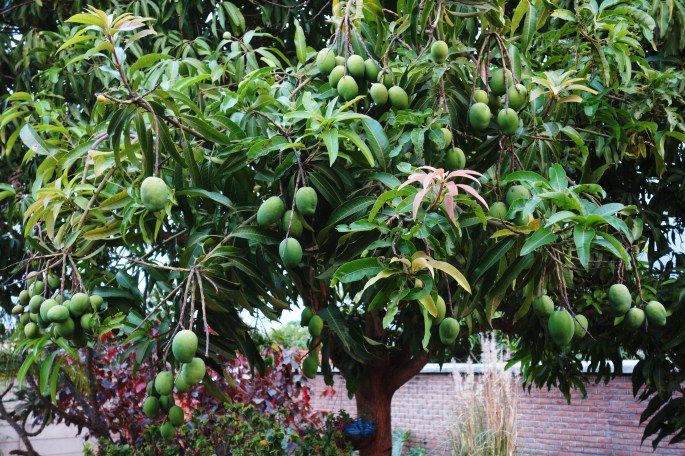
[Above photo: One of our mango trees is going nuts!]

We have finally gotten official permission from Peace Corps to break evening curfew for Thanksgiving dinner. We’ll do it at Chez Nous—Linda loves to do a big and excellent feed for everyone and between the GHSP vols and the SMMHEP vols and some friends, 12-15 people will crowd into our small cottage and celebrate, give thanks, for the year past and the year in front. We all have plenty to be thankful for, especially compared to those for whom we care, mostly. No turkeys in sight so we’ll do a number of roast chickens with stuffing, home made bread, roast potatoes, salad from our garden, pies, and so forth. I skipped lunch, as we often do on Sunday, which in part accounts for my detailing Thursday’s menu.

I was asked to do lectures on Psychopharmacology and Neuroanatomy and Physiology for 3rd year Mental Health nursing students at Kamuzu College of Nursing, where Linda teaches. Except I’m teaching at the new campus out of town. It is on a hill, beautiful new buildings with lots of natural light and air and splendid views. The plan was, and the hope is, to build a new district teaching hospital on the grounds which will be handy for the faculty and nursing students. Anyway, the psychopharm lecture was for 3 hours and went well in a rather warm room with only one of nineteen students briefly dozing off and one standing in the back to keep from doing so. I mentioned that my wife took a photo at the end of her 4 hour class last year in an overheated room and that everyone was either stretched out asleep on their desk or pacing at the back of the room. They all yelled, “Linda!” with cheer and gusto and she was very pleased that evening to hear it.

I’ve been putting together the 3 hour neuro lecture all day. I haven’t carefully looked at that material since medical school—well, some of it during my year of medical residency when I rotated through the Neurology service at Harborview Hospital in Seattle. 48 years ago! I am, again, amazed at how much of it stuck.  It isn’t that I recall it with enough precision to locate a patient’s cryptic neurological lesion from their gait, their history and a physical examination but I can rapidly make sense of the subject as I assemble the lecture. I can’t believe it, but it is kind of fun! (Don’t worry, I can think of more fun things to do! I haven’t gone entirely off the rails.)

One of the registrars asked me to consult with him about a 70yo woman who has had many admissions to Zomba Mental Hospital for schizophrenia. She lives with her son. She has been non-compliant with her medications and recently had a dream that she had sex with him. The dream was so real for her, in her state of mind, that she is overwhelmed with guilt and shame, refuses to go to church or see her friends as she thinks they all will know the cause of her shame (thought broadcasting), and feels like her life is over. As we interviewed her, her daughter mentioned that she had drunk ¼ of a cup of OMO, a pretty fierce laundry detergent, yesterday, then vomited. She had been looking for a rope to hang herself and was just stopped from plunging a long sharp knife into her chest by her daughters. It was clear that she needed both regular antipsychotic medication and protective custody, so we sent her back to the hospital. It is a tough dilemma for a person with schizophrenia. The side effects of the medications are often quite unpleasant and compliance with taking them after hospitalization is less than 50% in a year in the US, from what I’ve read. But not taking it leaves them vulnerable to the kind of imagining and thinking from which the above woman was trying to escape permanently.

Reading about neuroanatomy and neurophysiology, I am amazed at how little our knowledge base has grown in almost 50 years, despite many very bright, committed people using very fancy equipment and clever experimental designs to try to unravel it. We really don’t know Love, at all, in the words of Judy Collins. Or much else, let alone how to intervene decisively for people suffering from schizophrenia or autism, to name just two common illnesses. We can work around the edges and can make some differences in their lives; we just don’t understand the root causes of either and so cannot definitively address or correct them.

I have seen a man a few times over the past year who complains of feeling weak, tired, and without any sex drive for 10-12 years. He’s had a remarkable workup here and I even consulted a senior endocrinologist at Harvard about him. His lack of sexual interest, he feels, caused the demise of his first marriage and is threatening the second. His testosterone levels, and all other laboratory, including endocrine, parameters, are normal. He doesn’t appear depressed, although he has been unsuccessfully treated several times for depression with adequate doses of amitriptyline and fluoxetine. I wondered aloud with him if, possibly, he was gay. No. As he was detailing his complaints and I was trying not to fade out, I realized he may have what in the US is not an uncommon diagnosis: Chronic Fatigue Syndrome, whatever that is. So little we know about the mind-body. He seems to want us to listen to him but there is always an implicit demand that we cannot meet, which makes it difficult for both the patient and the physician.

I recall an article from the ‘70’s in the New England Journal of Medicine about the 4 types of patients physicians hate to see in their waiting room. The only one I recall is the “Help-rejecting complainer”. When I did a recent lecture on somatization and conversion (dissociative) disorders, I set up a role-play for the students in which the patient was a woman with multiple and shifting complaints. Sore knees, sore low back, headache, bowel difficulties, pain in the elbow, etc. The student who played her was excellent, letting the complaints gradually drip out. Her irritated and fed-up husband was also in role and the medical student and consultant interviewing her were stumped, finally bursting into frustrated and impatient laughter at the impossibility of meeting the patient’s requests for relief.  It was instructive for us all, in part on the limitations of our ability to heal or help. It was easy to re-direct the medical student and consultant to think about the psycho and social in the BioPsychoSocial Model of illness, health, and patient care in which we instruct them. And easy to demonstrate that only that kind of embrace of the patient’s complaints could begin to address them. Still…

So, Linda is whipping up ideas for a Signature Cocktail for Thanksgiving and what better way to celebrate this season than with a mango puree, ginger-infused vodka drink. Maybe with a splash of Savannah Dry (cider). And some stuffed roast chickens. On the side.

Post-script: The drink is mango puree, ginger, mint, Rose’s lime juice, vodka and a dry cider splash to finish. A smash hit!

Home Sweet Home

12 November 2017

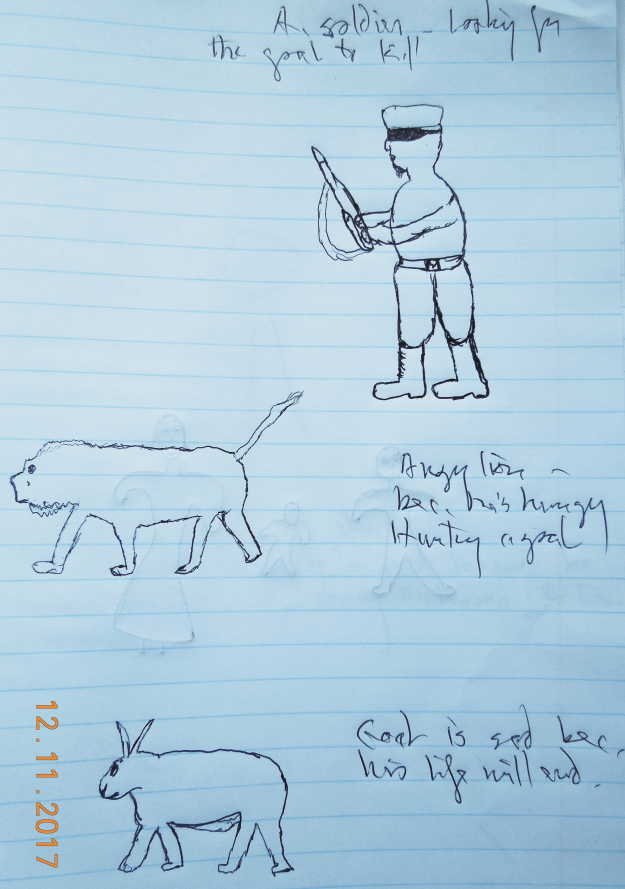
[Above photo: From top to bottom, a soldier, a lion, a goat. See below*.]

Our cottage has metal-framed casement-style windows without cranks, like most of the houses and buildings here. We keep the windows open always, although when Linda was gone I shut those in unused rooms to cut down on the dust. Each morning as we lie in bed and daylight creeps into our world, a friendly house sparrow perches on our bedroom window and sings and chatters. Our view of her is unobstructed and we can see how she opens her beak and bobs her tail each time she utters a message. It is darling and if she awakens before us, it’s the price we pay for wildlife at the window. Also, I’ve noticed that the extremely handsome white-browed robin chats (basically, robins dressed to party) are filling the niche that the pied wagtails did last Spring. They rule the yard, hopping about the lawn, flying into the bushes, bathing in the birdbath. I’ll be sad to see them go. Robins on our lawn, for me as a child, were a reliable symbol of normalcy and predictability in a pretty chaotic family.

The rains are beginning. We’ve had a few light ones but this morning an hour after Linda headed for church the heavens opened and emptied. It is intermittent; now we have thunder and lightening at 11AM. Thinking I’d keep her dry, I drove to the church, Catholic Institute, and texted her to let me know when the service ended. I watched people exit the church and awaited her reply for an hour, but finally I heard nothing and no one was exiting. I don’t know the times of the various services there, so I’ve returned home and am writing this, hoping she’ll get my text. [She didn’t until she came home but wasn’t soaked.]

She made an incredible supper for Stefan and Lucy (and us) last night. Our oven is out so she made a flatbread in the wok and served it with olive tapenade to accompany the gin and tonics. I grilled a filet mignon over charcoal and cooking briquettes. She made a fabulous salad, all from the garden—julienned beets, kohlrabi, and carrots on a bed of lettuce—, a pasta with a caramelized onion/sundried tomato sauce that makes me salivate when I think of it. and eggplant rolled in panko crumbs (made from an old loaf of homemade bread) and fried. For dessert, vanilla ice cream with a hot local ginger fritter and sliced mango. We then drank whiskey and ate dark chocolate until sated and staggering.

It is difficult for Stefan and Lucy to figure out their next move. Lucy, having worked for years in Cairo for Al Jazzera, would like to spend more time in the Middle East. She wants to go to Lebanon, but the current situation there appears unstable. Stefan wants to pursue a PhD in the UK to facilitate an academic/research career. However, because of Brexit, he couldn’t get a job in UK after 2019.  It is strange for me to think of him having the virtually unlimited freedom (and frustrations) of his current job as the Director of the Department of Mental Health at the only medical school in the country and then to think about him returning to fight his way up a crowded hierarchy, sharp elbows jabbing him, as an early-midcareer academic.

We are getting a good soaking as I write. Maybe the bloodsucker rumors will cease as people turn their attention to planting. Certainly they’ll want to resume sleeping indoors. We still have time (6PM) and location (urban Blantyre) curfews, which is getting old. A number of the new volunteers, who were permanently pulled from their sites after only being there 1 ½ months, have taken Interrupted Service: basically, an honorable discharge. I guess it wasn’t for them. It is easy to imagine, as they have neither electricity, internet, English-speaking peers, or an interesting diet in their little villages. It is a trying experience, being a basic 2 1/2year volunteer, learning a new language, trying to figure out how to be effective in a very different culture, surrounded by poverty and hunger, and isolated from peers at their age. Peace Corps labels it “The hardest job you’ll ever love.”

Seeing old photos of Linda in 1979-82, as a regular PC volunteer in northern Malawi , as a young bride, a young mother, and a young nurse, carrying her newborn on her back tied on with a chitenje or astride her Peace Corps-supplied motorcycle preparing to head out to a (even more) rural clinic, I am struck by her appearance of confidence and competence.  It was an early step in an amazing life trajectory, working to help women all over the world. Oh, to be young again, knowing what I do now!

*I saw the boy in clinic on Monday who had been intentionally castrated at 7yo. The above drawing suggests his mental state. The lion is angry because he is hungry. He’s hunting the goat. The goat is fearful and sad because he knows his life is about to end. And the soldier at the top, far from protecting the goat from the lion, also wants to kill the goat.  He is all of those—lion, goat, soldier—and more. We’ll proceed in metaphor for as long as the child wants. I won’t push him to explore the details of his amputations, letting him know by my attitudes that I am willing to listen, unafraid and uncritically, to anything he says. He is such a sweet and smart boy that I have hope for him. But I need to train others more directly to do psychotherapy with children, since my time here is limited.

I’ll begin a series of minilectures in our Wednesday morning clinic meeting, starting with child development and in what ways seeing a child in therapy is different than seeing an adult. It will help me to review it all, as well. Hopefully enough others will want to see children that the clinic will continue.

Time is flying! Taking vacation into consideration, we have less than 7 months of work left here. I have had a new thought. If I don’t get the Fulbright to SE Asia or if, for some reason, it doesn’t look like what I want, I can return here twice a year for 7 or 8 weeks to teach medical students and work in the clinics. I’m sure I could get housing, even if I have to shoulder the other expenses (flight, food). I have a car here and am sure I can store it easily.  I like the idea of keeping my hand in, especially the child mental health clinic and the child study group.

Working here is realizing a long-held dream of mine.  I am remarkably fortunate to be able to realize a number of my dreams.

Back in Blantyre and Linda Returns

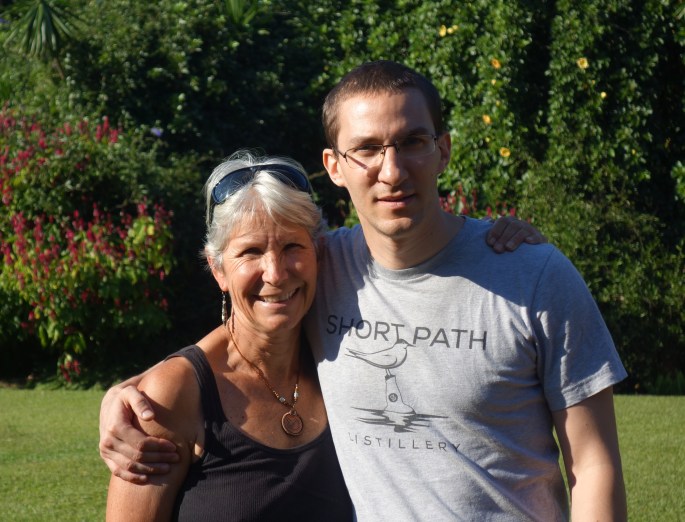
[Above photo:  Linda and her son, Jordan at Satemwa Tea and Coffee Plantation. He was visiting in May from Warsaw. He is multitasking, advertising his brother’s Everett, MA distillery. Best gin ever!]

5 November 2017

Linda has returned! After a 2+ month separation, during which she drove, spoke, and visited up and down the Eastern seaboard from Tampa to Bar Harbor, she is giving up the gypsy life and settling into our routines here. I expect my nutrition will improve greatly, as well as other aspects of my mental and physical well-being.

It has been weird enough with Linda gone for 2 months.  But living in 2 hotels in LL and eating all meals in restaurants has added to the sense of—I was going to say “anomie” until I looked up the definition. No lack of moral standards here. More a sense of personal alienation and isolation, despite having other vols with whom I enjoy supping.

I wonder if I’ve turned into a curmudgeon, as I’m having some difficulty readjusting to thinking of a twosome rather than a onesome. It is what I want, however, so I’ll get there. I certainly was lonesome for her when a onesome. It was fun this morning, planning our trip over Christmas to the north. We’ll visit Nyika Plateau (leopards and mountain zebras), hike three days to Livingstonia (the site of the third and final iteration of David Livingston’s vision for a Church of Scotland in Malawi), and drop down to Lake Malawi and take the Ilala to Likoma Island near Mozambique, the site of a huge 150 year old Anglican Cathedral and glorious snorkeling.

Yesterday I read my nephew, Gordy Stewart’s, manuscript of the disastrous and near-catastrophic sea voyage he took in 1975 at 12yo with his brothers and father to Bermuda. They sailed the beautifully built 36’ trimaran my brother had constructed in their back yard. On the return trip, and it was about 700+ miles, they encountered an immense tropical storm with winds of 70mph and waves of 50’. The boat eventually capsized, my brother’s insulin was lost and he died in a few days in ketoacidosis. The boys were rescued by a Greek freighter after 15 days on a boat upside down in the ocean, an absolutely fortuitous save. Gordy’s account stuns me and is so vivid, without unnecessary drama, that I am transported back to that July in 1975. How those boys managed, I’ll never know, displaying such courage and resiliency.  And their mother, as well. Gordy is looking for a publisher now.

On a lighter note, “Upstream fiber blockage.”  Sounds to me like someone ate too much raison bran and their peristalsis balked at the bulk. It actually is the excuse used here by Skynet when the internet is really slow. Often they toss in an exotic sop, shuffling off the responsibility, “Upstream fiber blockage in Mozambique”, as if that will lessen our…what? Frustration, I guess.

Road Traffic. The words sends shivers of fear, laughter, and perplexity through me. I entered the premises at 1:45PM on Thursday with 70,000Kwatcha and left at 4:15PM with my license in hand. In between were all manner of experiences, including, “Go sit in there for the Commissioner”. It was, I found out about half an hour later when I asked, his secretary not the Commissioner. She was eating, talking on her phone, and pleasantly doing nothing. “I have to see a patient in an hour. Do you think I’ll be through by then?” “No. The Big Man isn’t here.” “Is he coming?” “Sure, sure, he’s coming.” He actually did at about 3PM, a forceful, immaculately dressed man, handsome, a bit loud. He took me before a woman who had been waiting since early morning, despite my protests. “No, Doc, you have to see patients in the hospital.” Then for the eye test and up to the bank to pay an $8 “Booking fee”. On the way I stopped to buy a copy of the Malawi Rules of the Road. “We don’t have any in English. Come back in a week and we will.” “Not one?” “Well, we might have one.” I cave, “I’ll pay some extra for it.” Another young man goes to a file cabinet and hands me a copy, for which I reward him with $2.70 since I didn’t have $1.30. Very grateful. I dig into it while waiting to pay the fee. Back to the Big Man’s office. “How old are you?” “77yo.” “You’ll have to get a medical certificate….oh, forget it.” Then his assistant whips me into a secure room to take the computerized written test. “I need to study a little.” “Don’t worry, I’ll help you.” Whereupon he takes the mouse and runs through every question so I get 100%. Kind of like the COF I described before. Then up to the bank to pay $80.00. “They’re closing. Is your day tight tomorrow?”. “Yes”. It was four minutes to four. “I’ll run.” “Don’t worry, give me the money and meet me here.” He returns, prints my driver’s license, I thank him with a 2000MWK note ($2.70) and I ride my bike, which I prefer to the car, in the light sprinkle foreshadowing the rainy season, home. So, they didn’t check my car’s fitness and didn’t check my knowledge. Or my fitness. They did do a vision test with a slick little machine, though. I guess I passed the vision test, although who knows?

Earlier in the week while in LL I consulted on a patient who was not improving at St. John of God.  He was a 25yo man who had a febrile illness, dubbed “malaria” in the chart three weeks before admission, despite a negative Rapid Malaria Diagnostic Test and no parasites seen on smear. He then had a headache and vomiting, and he began to have difficulty walking and speaking. Seen in the ED’s at QECH in Blantyre (where he is a 4th year student at the Polytechnic) and at the ED at Kamuzu Central Hospital in LL where his parents live, he had a number of investigations which were all reported as normal. These included blood tests (including HIV, VDRL), a CT scan, and a lumbar puncture. When I saw him he was screaming and writhing at times, holding still at others. There was no intelligible speech and he wouldn’t/couldn’t follow commands. He was diagnosed with a Conversion Disorder.  As we looked through the chart after I examined him the nurse quickly found that the attempted LP was unsuccessful because he was too agitated, there was no known trigger to suggest this was a Conversion Disorder, and there was only a verbal report of the CT saying, “Normal”. He has been afebrile during his entire hospitalization of 2 weeks; if he’d had a bacterial meningitis, he’d likely be dead. I suggested he needed an LP right away, further and more detailed history-taking from the family, and a written copy of the CT scan report, as well as a repeat of his blood investigations. I suspect he may have had a viral encephalitis and has suffered significant damage from it. It certainly looked like delirium to me and didn’t look like a Conversion Disorder. I’m in touch with the Clinical Officer about it by email.

I saw a 43yo mother of four today in clinic. She wanted to remove her youngest (5yo) child from the Pediatric Special Care Unit so she could be treated at home with prayers and a traditional healer. The girl has cerebral malaria and has been in status epilepticus; they are watching her brain gradually wither, I am certain. The poor woman lives alone with her children, estranged from her parents who live very far away, there is not enough food for them, she has been at her daughter’s side 24/7 for a week, her husband has been in S. Africa for work for 7 months and she fears he may never come back and on and on. It turns out she had a puerperal psychosis after this child was delivered. She is depressed, of course, but not psychotic or suicidal—just crushed and exhausted, watching her daughter’s potential evaporate. If I ever feel I’ve been through tough times, and I have, I am quickly snapped out of my misery by hearing a story like hers. Poverty is so destructive of family relationships and social structure, as much as it is sometimes romanticized as pulling the stronger closer to help the more vulnerable. No one who has been intimately exposed to this, or experienced it, could sustain that fantasy as negating the trauma.

It’s part of why the DT-Paul Ryan tax cuts for the superrich are so difficult to accept. Among developed countries, ours has one of, if not the, lowest tax rates. We get a lot for our bucks. What we don’t reliably get is decent national leadership and a fully-integrated universal health care plan.

I just came back from a funeral. I was notified yesterday by one of our registrars that one of our wonderful nurse’s brothers died in QECH yesterday. At least, that’s what I heard. He told me the ceremony was at 1:30PM today at HHI. “What is HHI?” Harry Henderson International School. A huge campus. After parking, I walked up to the gorgeous old church and there was a ceremony, with joyous singing.  Soon I thought, boy, they really celebrate death here. Then I saw a sign on a nearby car—“Just Married”. Oops. I was pointed to another, modern-looking church which I entered and sat down. An usher came by with a flyer. “This is the funeral?” “Oh, no, it’s a 5 year marriage anniversary fund-raiser.” Oops. He pointed to a dirt road. Walking there I saw a young man and a woman sitting. “Where is the cemetery?” The result of our language limitations was that he led me into a chimbudze (toilet). We all had some laughs. I spotted a man in a van. “Can you push? I’m stuck.” Then, sizing me up, “Can you drive?”. I got in and he pushed and we eventually rocked the van free. “The cemetery is up that road.” On and on. Huge cemetery. I finally found the spot where the burial would take place but no people. “Oh, about 3 o’clock”. At 3 they came, about 75 people, moving solemnly.  I saw the nurse and I put an envelope with some money in it into her purse.  The ceremony was very moving, all in Chichewa, with lots of strongly expressed emotion by the immediate family of the deceased and beautiful singing by a choir of 7 women and 4 men. Such harmonies! We all sat, even the men in black suits and the women in beautiful chitenjes, in the dirt.  As the nurse gave my envelope of money to our newly-minted psychiatrist, I discovered that it wasn’t the nurse’s brother who died, it was our psychiatrist’s step-brother.  Finally, as I was driving out the gate I spotted the nurse, another of our nurses, and their friend all heading for the minibus stop. I offered them a ride and they happily accepted. At least I got one small thing right this afternoon.

The sun is setting, Linda is cooking something that smells wonderful, and the birdsong is deafening. The little mango tree in the back is loaded, as is the big one in front.

In Memoriam

[Above photo:  At the Robberg Nature and Marine Reserve on S. Africa’s Garden Route. ]

29 October 2017

I must go down to the seas again, for the call of the running tide
Is a wild call and a clear call that may not be denied;
And all I ask is a windy day with the white clouds flying,
And the flung spray and the blown spume, and the sea-gulls crying. —John Masefield


It was so good to visit family in Cape Town. Everyone was warm and welcoming, despite the constant backdrop of Christopher’s death. He had idiopathic myocardial hypertrophy [not previously diagnosed], in addition to a pulmonary embolus, on autopsy in Dakar (previously I said Accra, as that is where I thought the plane landed). My niece orchestrated a wonderful party of celebration and remembrance of Christopher in their pretty backyard. Lots of good catered food, although the catering truck broke down en route and some things were delayed in arriving, like ice for the beer! Many people came and many had worked with Chris from the time he was working on his Ph.D. to the present. There was an outpouring of love, admiration, appreciation, and humor which greatly enriched my picture of who he was. I generally only saw him at our island, marinated—or marooned— in my family’s relations. To me he often didn’t seem to be  particularly happy on the island, which is often the case with spouses,  understandably.  However when he was relaxing with Deirdre, discovering things with their son, Jacob, trimming grass or felling trees, or riding the Velociraptor, a gaudy purple and yellow pontoon boat with a bicycle mounted on top, he relaxed into pleasure.  The Velociraptor’s bicycle chain drives a propeller, and it really does!  He, at 6’10”, perched and folded on top of the watercraft looked like a huge, exotic prehistoric waterfowl.

I came away feeling grateful that I was able to go and share this time with them.  My niece is so capable, has such a fine mind, and is so lacking in pretense. And Jacob is a fun, curious, multitalented boy who will miss his father terribly, and will be fine, I believe. He has many well-recognized features of resiliency, including being smart, hard-working, appealing, and very engaging, as well as having a devoted mother and a supportive extended family. Moira, their long-time housekeeper, is a kind, savvy, and loving woman.  My nephew, Rob, was, as always, steadily and effectively kind, generous, and helpful.  And my sister, bless her, is a treasure at times like these.

My return to Lilongwe from Cape Town promised to unroll like a Marx Brothers’ skit. My through-ticket was to return me to Blantyre, as I optimistically thought I’d return there within 10 days of being consolidated to Lilongwe. When Peace Corps insisted I return to Lilongwe, they graciously bought me a ticket for the Blan-LL leg. But since it was an add-on, I was assured by all Malawi Airline personnel in Joberg and Cape Town that I’d have to deplane, check through customs, go through security again, and re-board the same plane. And that there wouldn’t be enough time to do it all. I could see myself scuttling along, elbowing people out of the way—“Excuse me. Pepani. I have to get on that plane I just got off. Zicomo.”—and generally acting badly to go along with protocol. Thankfully, one of the flight attendants told me just to sit tight on the plane and she’d fix it. Which she did. Crisis averted. Bless Malawian flexibility, kindness, and accommodation. I believe that the violence in the south has settled and life is resuming its normal, hungry contours for the villagers. It would have been fun to sleep at home a night but it would have caused all manner of worry and problems for PC Admin and they have enough in their backpacks, what with 50+ regular (read 24yo, average age) volunteers consolidated in LL and trying to figure out what to do with them all. Many may not be able to go back to their sites and there aren’t nearly enough available other village sites in Malawi to settle them. Plus, they really can’t go to other countries as they haven’t had the cultural and language training (2-3 months) to prepare them for such a switch.

I’ve just finished the book I mentioned on the history of Malawi by the former Norwegian ambassador. It turns out that 100 years ago, later at independence, then at the end of Kamuzu Banda’s 30 year presidency, and currently Malawi has always had a lower per capita income than the surrounding countries, even though it ranks better than many on some other parameters. The population is too dense and getting more so, HIV has devastated so many families, transportation of exports is very expensive since we are landlocked, the soil is exhausted from years of planting maize only and from the loss of topsoil by erosion associated with deforestation, and so forth. Yet the people are so kind, sweet, and generous, if terrified and superstitious at times. Still, let’s recall that we entered Iraq on false pretenses and the UN and Johns Hopkins University estimated that we killed between 200,000 and 300,000 civilians, which puts 8+ innocents accused of bloodsucking [and later killed] into perspective. And they really were scared, if unnecessarily. We, however, had simply wanted Iraqi oil and another foothold in the Middle East.  And if African strongmen are corrupt and arrogant, what about our homegrown variety of the same?  It makes me feel bleak about our collective future, especially as Japan, S. Korea, Vietnam, etc. are all seriously considering developing nuclear missile capacity.

BLAM====I just hit the wall and will have to continue this tomorrow. I briefly fell asleep while typing!

I’ve been visiting the psychiatric facilities of St. John of God in LL while I am here.  I want to see how they do it. I was terribly impressed with their mental health services in Mzuzu.  Here it is new and spacious and pretty and the patients are getting excellent care from well-trained Clinical Officers. It goes to show that task shifting is a viable manpower approach in mental health care, as in many areas of medicine. The facility consists of a number of attractive one and two story brick buildings on a large plot of land with their signature landscaping. Some structures are in process, others fully functional. Eventually they will have acute and rehabilitation inpatient units for men and women, a rehabilitation workshop building and programs, a substance-abuse residential treatment facility, an outpatient clinic, and a program for learning disabled children and teens with vocational training programs. And probably more. But very comprehensive. Morning report began today with someone saying how Respect was a core value for them and others then contributing what Respect meant to them in that setting. It set a wonderful tone for the meeting that followed. There was an opening prayer and a closing prayer. Then the hand-over details of who had come in to hospital, who had left, and who absconded (No one. Why would anyone?) over the weekend.  I later sat in with a clinical officer as he saw patients and we discussed their diagnoses and management plans. It was refreshing and inspiring. Queens is a typical, poorly maintained big city/county-type hospital facility, crumbling. We do good work and good teaching and the medical students and registrars get an excellent mentored experience. It would be much nicer for all concerned—patients, students and staff—, however, if we had an attractive, functional building. Which may happen, as there are several plans for the same under consideration.

Linda has so many balls in the air right now I feel for her. Having her car break in NYC so that she must now retrieve it, repaired, two days before she flies to Malawi, just tipped her balance from a crowded agenda to a near-impossible one.

Speaking of impossible, let’s see what squeals and twists come from the White House, or whatever golf club he happens to be playing, as the indictments begin to arrive. He’s already trying to point his grabby  hands at Hillary, as if it were relevant to whatever his, or his family and associates’, misdeeds are. A childish technique of distraction.  I don’t know what laws either he or Hillary may have broken. Hers are hers, however, and his are his. I remember Bobby Spoon, in 4th grade, passing a loud fart and quickly pointing at the girl sitting in front of him, as if she were the culprit. Enough said, DT; and you wonder why people think of you as living in Romper Room?

When I think of Christopher, the word Integrity pops up. A fidelity to his values, as we heard repeatedly on Saturday at the celebration.  I suppose by that definition, DT has integrity; we can always count on him to be crude, boorish, uninformed, and selfish, employing dishonesty without remorse (or possibly even without recognition), to remain true to those values.

Consolidation [aka Evacuation]

22 October 2017

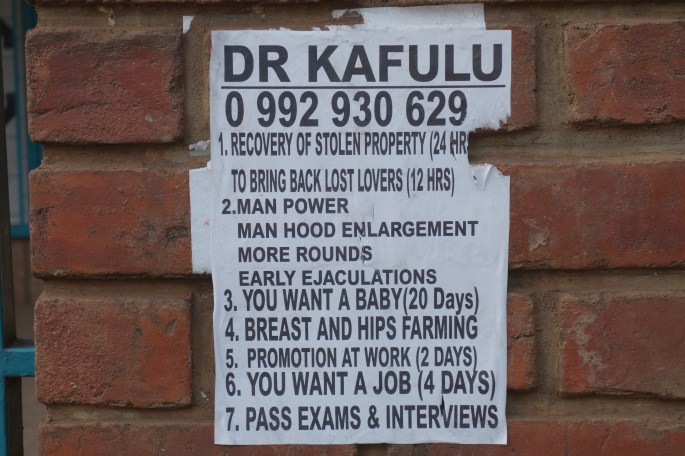
[Above photo: Competition among primary care providers is so intense in Malawi that expanded skill sets are not sufficient.  To be competitive in this health-care environment requires time-lines for task completion.  Many questions remain, however, such as seeding, irrigation, cultivation, and fertilization for breast and hips farming.]

I’m sitting in the Bridgeview Hotel in Lilongwe. This visit I do have a view but there is no bridge in sight. The room is clean and light, the shower huge and tiled, and the beds—well, their idea of a mattress is springs with about ½” of batting overlying. Still, the bed doesn’t smell of others’ sweat and the air-con and TV both work. Watford was up on Chelsea 2-0 but Chelsea came back 4-2. Huddersfield crushed Manchester United 2-1, their first victory over ManU in 65 years! Serious celebrating in Huddersfield last night.

We were “consolidated” to Lilongwe yesterday.  All of the GHSP, Peace Corps, and Peace Corps Response volunteers from southern Malawi, including Blantyre urban, were driven to PC Central here via PC vehicles and drivers. The unrest in the South has been striking and spreading rapidly. The ensuing confusion suggests to some locals that the bloodsucker scare is a cynical manipulation by opposition politicians to make the incumbents look impotent. It has been working, although now with tanks in Ndirande (a huge shantytown in Blantyre) the current administration at least appears muscular. Others think that it is fostered by some to create chaos and allow for more robberies. A truck carrying sacks of ufa, corn meal, was set upon by a mob after someone shouted, “There are bloodsuckers in there.”; the ufa was all stolen. Likely it has to do with many things, including the constant fear of events beyond people’s control, such as the rain, starvation and hunger, malaria, HIV, and other illnesses, and so forth. But innocent people, 8 or more, have been killed, including some clearly mentally-ill persons. When village chiefs have attempted to calm the populace by debunking the bloodsucker tales—they escape by airplane, they use iv tubing—their houses have been burned to the ground.

The last person I saw in Thursday clinic was a 23yo man. He had spent the night in the AETC (ED) and was referred to us. I found him in our waiting room, lying on a bench, looking depleted, with no shirt or shoes, belt undone and pants unbuttoned. He staggered to the consulting room, accompanied by his sister and her 6 week-old infant. His wife and child are away for a week, visiting her relatives, so he is living alone. According to him, two men came into his house while he was asleep; one clasped a hand over his mouth so he couldn’t scream while the other inserted a needle and began to withdraw blood. He, somehow, managed to scream out loud and the men disappeared.  They didn’t run away, just magically vanished. I did a careful evaluation and he does not have a mental illness—rather, a sociological one similar to the contagion of mass hysteria I’ve described in schoolgirls in an earlier blog post.

In discussing it with our psychiatric nurses, one mentioned the political angle above. Then she said, “But back in 1985, during the rule of Kamuzu Banda, men in scuba suits with flippers and gloves with long metal claws would enter people’s homes and attack them.” “How did they get in?”, I asked. “Do you know Terminator with Arnold Schwarzenegger? Well, they would turn into liquid and could go through little cracks in the door or windows. Then they’d resume their form, do their attacks, and transform again into liquid to escape.” Uh oh.  I happen to know from personal experience that it is almost impossible to walk with flippers on, let alone move swiftly. If magical thinking runs so close to the surface in our mature, trained nurses, what must it be like for the 85% who are illiterate and have little schooling? In all fairness, the nurse telling me this had lost her father when she was young; he was a printer/publisher who knew too much and was killed, along with thousands of others, by associates of the late president for life, His Excellency. Given this bloody record, why the stadiums and highways named after him are not renamed is a mystery to me.

The trip north was eventful only in that one of our number drove their own car and at a gas stop slightly scraped another car. As the discussion proceeded with the owner of the damaged vehicle, our volunteer felt very alone and not supported by the ten of us travelling in the PC van. The vol didn’t recognize our driver standing nearby the entire time, next to a sizeable group of black men. The vol had met the driver before we set off, shaken hands with him, even.

It made me think about how tribal we are. At first in a new situation, other people [black, in this case] look very similar to many of us. And how many times have I, just another white guy with a beard, been mistaken for someone a black person thinks they know? Many.  It is such a universal phenomenon. Until we are familiar with each other, we unconsciously don’t view the other closely enough to recognize differences. If we take our kids to a party of adults and kids, we all instantly head for our “tribe”, as do dogs and other social beings. Some of the deep roots of fear and prejudice, I think. Seeking safety through similarity, as specious as that is.

A Malawian doctor from Queen Elizabeth was stopped at an impromptu roadblock in Blantyre, threatened by men with machetes, and then robbed. We are advised not to display any medical equipment in our vehicles, as there is an association between medicine and bloodsucking. I suspect the NGO workers taking blood samples in the villages for malaria or HIV research have unwittingly contributed to this. I’d been told that hanging a stethoscope from my mirror would ease my passage past the many police roadblocks. In my trial of 1, it didn’t help a bit so I’ve removed it.

It has been fun getting to know some of the younger vols, as well as the older, here.  A Peace Corps Response volunteer serving in Mangochi is 82yo. She trained as a Physician’s Assistant at 60yo and has worked for years at a time in Mozambique, Vietnam, Kenya, Lesotho, and numerous other spots. She’s having a great time and has a wonderful trove of tales. Age is just a number, although some of our bodies fall apart sooner than others’.

It is cloudy today. Does The Weather know that November is approaching?  Is it then preparing the desired rains? I can hope.

I’ll put this on the internet today, somehow, although the Net isn’t working in the hotel.  First, however, I need some exercise so I’ll plunge into the chitenje market as I saw a print I know Linda will love.

A Death in the Family

[Above photo: Christopher Duncombe Rae (blue polo shirt) at home next to his brother, William— 31 December 2016]

15 October 2017

I received an  e-mail from my nephew that his younger sister’s husband, Christopher, was discovered to have died when the plane on which he was flying from Cape Town to Washington, DC touched down to refuel in Accra.  A young man with a wife, Deirdre, an 11 year old son, Jacob, and an enviable career as an oceanographer in S. Africa, his home country. “Fairness” may apply to relations between people or nations but cosmically, it doesn’t. Our universe is indifferent to human suffering.  There is the loss, which lasts those left, forever.  And there are the very difficult life decisions then to be made. Shelter in place? Move closer to family and the familiar in the US? It all seems so cruel. As my eldest brother said when our dad died, “Why did this happen to us?”, an expression of surprised, hurt outrage, demanding an explanation.

I am listening via Spotify to the Reverend Gary Davis (Say ‘No’ to the Devil.) and Elizabeth Cotton (Freight Train), two of many amazing musicians to whom my brother-in-law, John Ullman, introduced me. Often I literally met them, as he cast off his PhD and a promising academic/research career to follow his passion, traditional artists, especially musicians and their music. As their agent he would arrange concert venues and recording sessions for them and get them there sober enough (when necessary) to perform with their particular artistic integrity and virtuosity. People like Mance Lipscomb, The Boys of the Lough, Doc Watson, and Queen Ida and her Bon Temps Zydeco Band. He and his wife, Irene, even published a cookbook based on Ida’s Creole recipes. How to make a roux. I mean, a ROUX. He took Bill Monroe and his Bluegrass Boys to Japan; the fans went crazy to hear this “hillbilly” music. Anyways, learning about and listening to these musicians has been a great source of pleasure in my life. Even trying to play a few of their tunes on my guitar. Trying. It recalls Alan Lomax and Chris Strachwitz, two of our greatest traditional music archivists combing the country with their tape recorders.  Chris was (This one’s for you, DT.) an immigrant. How thin our history would be without people like John, Chris, and Alan helping to preserve and publicize the often little-known music and musicians of earlier days.

Holy crow, there are 4 green birds with yellow breasts and three of the same variety but drab (female/immature plumage?) at the birdbath.  Willow Warblers? “Abundant Paleoarctic migrants Oct-May.” And I fancy myself as well-travelled! It’s strange how in our species the females are the flashy ones. I also saw my first Collared Sunbird of the season in the mango tree 15 minutes ago. Two Hammerkop just flew by and I saw a small flock of (to me) unidentifiable birds eating insects on the lawn. Black caps, black bibs, white breasts, brown backs—about the size of Oregon juncos. I must spring for the larger bird book—my field guide isn’t adequate. Oh, a Spectacled Weaver dashing up and down the bushes, eating insects. This is like living in an aviary.  Everyone is getting ready for the rainy season.

The bloodsucking continues down south, with ambulance windows broken from thrown stones. The UN has even withdrawn all their personnel and President Professor Peter Arthur Mutharika has come from Lilongwe to calm things. His is a large, calming presence, I suppose, even though everyone I’ve spoken with seems to find him an ineffectual leader. His brother, Bingu, was president until he dropped dead in his second term of a heart attack.  His VP, Joyce Banda, succeeded him and seemed to do a creditable job until Cashgate, a huge plundering of the national coffers on her watch.  When the next election came around, Professor Peter edged her out.  Usually being the incumbent gives you an advantage; in Malawi the problems, largely economic, are so dire that often the challenger wins as the incumbent has made little progress in fixing things.

We (Peace Corps) are now on STANDFAST—home by 4PM and stay there, don’t leave town, avoid any gathering, etc. It kind of put a kink in my going to the Lake for 3 days with Sophie and Eric. However, I’m enjoying the solitude and called Linda last night on Skype for a long talk. She’s on Hatteras Island, staying in a small cabin because of rain and high winds, exploring the Outer Banks. She’ll join my sister-in-law and 2 or 3 nephews further north in Duck for 4 days. They get on like duck soup. [Sorry!]

The fires in California are alarming and have caused such loss and suffering. Apropos, I’m watching “War” by Ken Burns and Lynn Novick about WW2 with similar special effects. The US population then was 123 million.  Now we are at 324 million and California’s rate of increase is more than double that (7 million to 39 million), being temperate, fertile, beautiful, and such an economic and job engine. And surfing!  People spill out of the cities to less expensive and more rural settings to live. With greenery comes brush and grass in the dry season. Lives lost, primary dwellings lost, all family photos lost, pets lost. A friend just lost her magically beautiful country place in Kenwood, consumed by fire.

I’m reading a wonderful new history of the country (“Malawi: A place apart”) starting with the earliest hunter-gatherers, the various tribal migrations, the slave trade, David Livingston and the other missionaries, British colonial rule (Nyasaland), and independence (starting with a 30 year dictatorship where His Excellency Hastings Kamuzu Banda watched as his opponents were fed to crocodiles), with subsequent variably free elections.  It was written with a sympathetic but clear eye by the former Norwegian ambassador to Malawi.  How power corrupts.  And how amazing South Africa was able to start over with Mandela who resisted that, as his successors have not.  Not to neglect DC, where holding office now seems to be treated like walking through a Bank of America vault.  So many of our politicians “lack all conviction”, as Yeats wrote, other than having a determination to hold onto their jobs at any cost, personal integrity be damned, so they can later become wealthy lobbyists.  Pander to the largest constituency.

I’m going to pause and make some baked goods—a loaf of bread and some scones—for next week. See if my muse can regroup.

After the pause….

I made scones and another loaf of onion-rosemary bread. The former are too sweet, the latter is fabulous. I did write more, above, and think I’ll call it quits for this week.

It was wonderful to see the 4th year medical students at the Feedback Session. At the end of their rotation we give them feedback about patterns of erroneous answers we saw on their final exams (long case write-ups, a 3 hour written examination, and 2 individual oral exams each), stressing that trends like that indicate our deficiencies in teaching, not theirs in learning.

And they give us feedback, which we use to strengthen our efforts in teaching future students. It was particularly gratifying that two of the five students who had to repeat the rotation because they failed last year finished #’s 1 & 2! Repetition works!

I told Chimwemwe, the day guard/gardener, not to come in today. I plan to be here all day, the garden looks great, he’s been washing my car, and, frankly, it is so nice to have the entire place to myself.