Consolidation

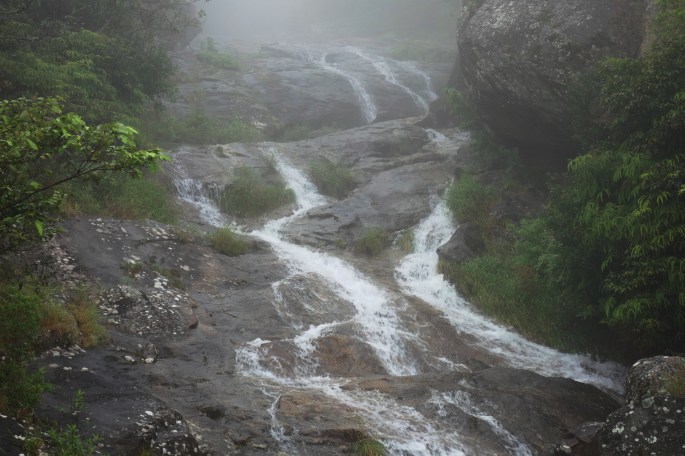
[Photo: Descending Mulanje after heavy rains]
11 December 2016

We had a Department of Mental Health meeting this week. It sounds rather grand but the department is tiny, including the Director, Stefan, the only Ph.D. psychologist, Chiwoza, the Administrative Assistant for one of the NGO’s funding the psychiatry residents, Dalitso, and myself. As modest a group as it is, Chiwoza announced the beginning of two exciting processes: the development of the first Masters Degree in Clinical Psychology program in the country and the possibility/dream of our own building on the College of Medicine campus, an Institute of Mental Health. There is committed space on campus to build the latter. These, coupled with the start of the first Alcoholics Anonymous group in Malawi, the Child Psychiatry Clinic, and The Blantyre Child Study Group, are very exciting to me. It all feels heady and sustainable. I commented to Stefan that I couldn’t imagine him returning to the UK to subject himself to the strictures of psychoanalytic training, given the possibilities of making such a difference here. And yet I recall how much I enjoyed my work at home. The most satisfying experiences I have now are similar, working one-on-one (plus guardian, often) with patients.  It is just different here, feeling such a pressing (?crushing) need and being able to whittle away at it significantly. From 0 to 1 feels like a much bigger step than from 4735 to 4736. To do this in the US I would have had to suffer all the boring and unnecessary crap one does as an academic/researcher or as a government employee/policy wonk. Here I can structure my work life almost entirely as I wish, although I’m tired of giving the lecture on Psychosexual Disorders to the medical students. No role-playing for that topic!

The first meeting of The Blantyre Child Study Group, 10 of us, was a success. People are hungry to learn and share.  They want to meet every two weeks! Half are Malawian, only two of us are temporarily here, so I have every hope the group may continue after my departure. Perhaps I can even Skype myself into the meetings after I leave.  I am applying for a small grant to allow me to form two similar groups in other cities—-Lilongwe and Mzuzu. It lifts my spirit to feel I can improve something here.

When the students evaluate patients in the Mental Health Clinic, I allow them to get into the hour+-long evaluation on their own, not breathing down their necks. Thus, on Tuesday morning I visited a boy in the Burn Unit, Joseph, with whom I consulted last week. He was at home in Mozambique when a gasoline tanker stopped in the village. The driver was illegally selling some gasoline; after a period of time he said everyone could have it for free. There was a run on the tanker. One of the runners no doubt had a lit cigarette and the tanker exploded. It killed 76 people outright. Joseph saw his uncles trying to rescue his cousin and ran to help. The cousin burned to death and he and his three uncles are in our burn ward in adjacent beds.  Joseph has suffered 3rd degree burns over 25% of his body and 2nd degree burns over another 20%. They asked us to see him because he had been very agitated on the ward. When I first saw him he was as they said, not responding to me at all, sitting up, lying down, biting himself, shouting he wanted to go home, and singing at the top of his voice. After carefully evaluating him with the resident, we decided to give him a low dose of an antipsychotic, feeling he was delirious from the burns, the sensory deprivation in the ward, and the trauma of his experience. I have seen him twice since and he is improving dramatically, speaking English with me and responding appropriately most of the time.

Joseph’s father and older brother were by the bedside. Joseph was sleeping but easily aroused. He talked comfortably, in both Chichewa and English, with me and his relatives. Suddenly, he opened his eyes dramatically, fell back on the bed and rolled back and forth, shouting “Heehaw, heehaw, heehaw” etc. After a few minutes he then sat up and was completely alert and normal again. He obviously was either having a post-traumatic re-experiencing, a conversion disorder, or was malingering. His father and brother are convinced that a Spirit is talking through him, telling them what they should do. They want to take him out of the hospital for 2 days to a traditional healer in their village. They assure me they’ll bring him back in two days for readmission for his burn treatments and physiotherapy. The entire family, including his grandfather, agree with this plan. If it can be done with medical safety, and I see no reason that it cannot as they only change his dressings every 2-3 days, I am in favor of it. I cannot say how best to heal his mind.

I also visited the boy I described in an earlier post as having had typhoid misdiagnosed and definitive treatment delayed. He perforated his bowel, required 4 abdominal surgeries, and looked straight from Auschwitz, he was so starved. Innocent was his name. He wasn’t on the ward. He’d been discharged a couple of weeks ago and the nurse told me he was eating a lot, gaining weight, and walking! Remarkable. He was an extremely bright boy, obvious even when he was in extremis.

I saw the 14yo panga knife victim on Thursday in the Pediatric Mental Health Clinic. Wonder of wonders, he’s had no more seizures, is eating and sleeping well, is playing soccer with his friends (he likes playing goalie), and is totally present when I see him. There is no dissociation and he even smiled several times. I am stunned. I thought he was lost to this world. These people, Malawian villagers, are unbelievably resilient. I’ll keep him on a dose of phenobarbital at bedtime for no. Clearly his brain injury from the attack leaves him with a lowered seizure threshold. It is probable that my using risperidone, even a tiny dose, triggered the seizures. I am truly astounded at his recovery. And so happy for him and his mother, who is remarkably caring.

As I walked back to Room 6 to hear the medical students present their cases, I was feeling badly about the three boys and their life-changing misfortunes. Ambling along the endless corridors with windows on either side looking out on the open spaces between hospital wings, I could see the many guardians and caregivers lying on mats or in the dirt, mostly women in colorful chitenjes, getting a bit of sun before resuming their vigil at their relatives’ bedsides. I then heard an utterly beautiful harmony. Three ladies in uniform mopping down the long hallways as they do every day were singing together, each a different part, easing their boring and tiring work with beauty in song. This is what I experience repeatedly in Malawi: unfairness and ugliness and hopelessness and misery tempered by kindness, and beauty, and persistence.  What these people might accomplish if only…..the list is very long. That, for me, is the problem.
Mango Season

4 December 2016

Linda returned from her clinical teaching in a village an hour away, having saved one woman a large and deep episiotomy and another a caesarian section by teaching the midwifery students to coach, assist, and encourage the mothers to push, by fending off the Clinical Officer who wanted to do the cutting, and by patiently modelling what she knows so well—patience with women in labor. On her way home she asked the driver to stop in the countryside where a woman was selling mangoes by the road. She bought 45 mangoes, two varieties, for less than a dollar. We are getting vitamin A toxicity, slurping these down. My idea of heaven itself!

What I have not written about are the other major themes in my life: that my divorce, after 43 years of marriage, is nearly complete and that both of my adult children don’t want to talk with me. I am not judging either my wife or my children, just noting that both events are seismic for me. I have managed to compartmentalize them some in order to proceed with my life, which is generally exciting, interesting to me, and useful to others. But they affect me, feeling a failure for a failed marriage and unhappy for the state of my relationship with my children. The four of us have shared a lot, most of my adult life, and to be deprived of each is huge for me.

In a new relationship with Linda I can see so much of myself I haven’t previously allowed. And see how difficult that must have made me to live with, because I needed to see myself as simply earnest, kind, honest, and hard-working, compliant and undemanding.  Generally those are true, but they aren’t the entire story. I’ve made no room for a direct expression of my desires. So they have come out sideways. I have certainly been concerned that I lack courage: not physically or for a cause. Just to directly express my needs, lest they anger or drive others away.

Today as we talked, Linda again challenged my myth that we were poor after my father died. Well, relative to my friends in Denver, we were. We lived in a tiny two bedroom house, mom slept in the living room on a Hide-A-Bed, and Chas and I each had a room. We rented out the basement to a couple, the Klings; he was finishing school to be a fundamentalist minister. We could hear his wife walking around the dark basement apartment, avoiding the black widow spiders we’d find occasionally, singing, “So let the sun shine in, Face it with a grin, Smilers never lose and Frowners never win.” in a tremulous voice. But, mom was a physician doing a psychiatry residency so there was a light at the end of the rather short tunnel to which the poor aren’t privileged. And we skied in the winter, hiked and camped in the summer, and never went hungry. We did eat a lot of Welsh rabbit (rarebit), creamed chipped beef on toast, cheese soufflé, and dishes to stretch a cut of meat, like ham timbales or lamb curry. Chas and I both went to Harvard and graduated from medical schools. I did work summers and all through college and medical school, but it was never odious. I’ve seen true poverty here. I guess I’ll have to bury the poverty bone.

Still, this afternoon I was wondering why I’d felt poor. Maybe impoverished is a better word. I grew up without a father and my mom, while an amazing person and very loyal, was never interested in my interior. And, mostly, I did a number on myself, with an overarching need to be perceived, my myself and others, as nice, not making waves. Mom’s 3 depressions with hospitalizations when I was 5, 6, and 7yo contributed to that. So I stunted myself in ways. And that can make one feel impoverished. And can be a terrible burden for your wife and children.

I cannot re-do the past and yet am unable to be free of regret. I wish I’d been more courageous in expressing myself, in being true to myself. I would have been a better and more understanding/inspiring father. The irony is that the only literary quote I recall from my mom was Polonius’ in Hamlet, “To thine own self be true, and it must follow as the night the day, thou canst not then be false to any man” (or woman).  As a kid I’d interpreted that as “Don’t tell lies”.  Advice is only as good as what you can allow yourself to hear.

I have my plastic waterbottle fenders and, wouldn’t you know, I haven’t been caught in the rain yet. But it is a relief to have them, a source of stress modified, if not totally relieved. There is actually a lot of stress here. People approach me for money every day, often little street children. They all look hungry and if I have some bananas I’ll share. But generally I say I am sorry but everyone wants money and I cannot give to everyone. I do give to the blind musician with his little daughter outside the GAME store. And for our guard/housekeeper’s son’s tuition/uniform/copy books/shoes, etc. Then, since my Chichewa skills are very limited, I must locate an interpreter, usually a nurse, for half of the clinic patients and all of the inpatient consultations I see. And, of course, since I have been doing child and adolescent work plus adult psychotherapy/psychoanalysis for years, the delirium, dementia, mania, acute schizophrenia, puerperal psychosis, and so on are a different population with different treatments than those to which I am accustomed. Then throw in malaria, tuberculosis, meningitis, and 10% of the population HIV positive, plus a potential raft of tropical worms and the like, and the uncertainty, and stress, rise. Plus you cannot go out at night because of the danger of getting mugged. And the guards’ boundaries are interesting; one of the young men heard the shower going yesterday and stuck his head up underneath the window to see what he might. Linda was bathing and saw a hand and then a face—he quickly withdrew and walked about his rounds. When we went out for our run she confronted him and read him out; he apologized. The biggest stressor for me is the limited resources for the poor mentally ill; few support groups, no sheltered workshops, no Alcoholics Anonymous (We may be able to improve that situation.), running out of medications often. I discovered that I can order an MRI—they have a machine and a building and a tech and a secretary—but I have to read it myself. What?!! I’m not trained to do so.

I’ve been seeing the 14yo boy I mentioned earlier whose friend’s mother attacked him with a panga knife. He’s now started having seizures from the subdural hematoma and brain injury he had so I’ve had to start him on an anticonvulsant. In the therapy session two weeks ago I realized that he didn’t just have a pronounced startle reaction; he is completely dissociated all the time unless someone engages him. I asked him to draw me a picture of the incident, which he did. All the human figures had no facial features. When he finished he cried out, jumped up, and tried to run out the door. I don’t know how this will go. I hope I can be of help to him. His mother is wonderfully patient and loving.

We ran a 5k virtual race yesterday, part of a world-wide effort to get people running. I was amazed that I ran a mile pretty easily and alternated walking and running the next two. So we are going to run regularly. Linda, having done 4 marathons and being significantly my junior (Don’t ask! I assure you she is not a child and has 5 grown children.), will undoubtedly step it up more than I want to but I haven’t run since my lung cancer in 2008 and it feels great. Moreover, we run the track at the College of Medicine Sports Complex which has a wide-open view of mountains and distance. There were two blue herons in the middle of the track yesterday when we ran. The clouds at sunset here are from a Rennaisance painting, complete with gold or silver linings, and I expect to see seraphim and cherubim descending. The natural beauty, including the greening from the rains, the birds, and the various trees in bloom, counters the scattered garbage and ubiquitous small light-blue plastic bags discarded everywhere. It is illegal to manufacture and sell them but……we call them the Malawian Blue Flowers.

The Well Is Dry

27 November 2016

Not literally dry. I just have nothing pressing about which to write. But don’t stop reading here—this is a fertile country, the rains have begun in earnest, and I’ll come up with something.

Like mudguards for my bike. I ride it everywhere and it saves me 30 minutes a day minimum, travelling between home to the Queen Elizabeth Hospital clinic, to get a bite of lunch somewhere, to the College of Medicine, to the market, and back home. Now that it is raining and the roads are soupy, I don’t want to get striped so I walk. But I am going to construct some mudguards out of 1.5 liter plastic bottles cut in half and attached with zip ties. I think it will work wonderfully, if perhaps it looks a bit funky. The closest, and only, bike store is some miles away in Limbe and, besides, it seems like a good idea to recycle these bottles. Berkeley has at least one bike store in every neighborhood. With bikes that would be the envy of any Malawian bike owner.

My child study group is coming together, with 11 potential members, half of whom are Malawian which is crucial for me. It is difficult to overestimate the number of NGO’s here, all with skilled personnel and varied agendas, all pumping some money into the economy through jobs, and all subject to folding their tents and going home. I feel Malawi must be for, and run by, Malawians. Ideally my job will not be needed in a few years—the initial charter for GHSP is 5 years, I believe. The idea is to train locals to take over the academic and training jobs in health care. Our three psychiatry residents (I’ve only met two, as one is training in Cape Town where they all spend two years.) are excellent and will be able to take over in a few years and do a fine job.

While I am greatly enjoying my 25 minute psychotherapy sessions with, now, 4 children, Linda points out that it isn’t how I will best use my time. It is a pleasure and a luxury for me to do something I enjoy so much. But she’s right (as she frequently is!).  I’m here to train, to develop something sustainable so when I leave in June it won’t collapse.  So I am going to begin to train medical students to do brief therapy during their 6 week rotation with us.  I’ll include the one available psychiatry resident.  I’ll supervise them for each case. It feels pretty weird to me, since I have spent so much time in training and learning how to conduct a therapy, to expect I can just throw them in with the kids and hope for the best. But, talk is talk and if I can get everyone to listen to the kids, to facilitate their talking, to identify themes and concerns, and to just be non-judgmentally with them, it will be a whole lot better than no one doing it. And who knows, maybe a few will get hooked and in 5 or 6 more years there will be some fully-trained child and adolescent psychiatrists here.

We are writing exam questions, preparing exams. The Brits, from whom this program is descended, are pretty crazy about exams. Written exams with Single Best Answer (Remember to alphabetize the answers and each must have some validity for the question.), Extended Matching Items (4 questions, 8 answers, don’t forget to rate all questions for difficulty as follows: What percentage of poor students would be expected to answer this question? 30%, 0.3? 80%, 0.8?), and Short Answer Questions (with a prescribed format.). Then OSKIE’s, the directly observed examination using real patients or actors. Then Long Case Questions. There are Final Exams for the 4th year students every 6 week rotation, Integrated Exams for the 5th year students in January, Mock Exams for the 5th year Residents in Psychiatry in January (to prepare them for the real deal), and their Qualifying Exams in March (Not sure I have all the names correct.). With banks of questions, for both written and oral exams, of varying degrees of difficulty. Constructing these is a major effort—and pain. I haven’t taken an exam since my Child and Adolescent Board exam in Detroit in 1994 but I don’t think we were so obsessed with test questions then. Still, we culled out 4 students who failed the last rotation because their performances were substandard and there was consistency between the written exam, the oral exam, and the long case write-up, so I guess there’s some validity to the process. They will be better physicians for repeating the psychiatry rotation.

We just came back from a wonderful lunch at Peter and Caroline Finch’s home. It is outside of the city, down a long and treacherous dirt road, then up a little valley through a park-like setting with a swimming pool in its midst. There are 3 houses on the property, widely separated. They rent from the Argentine couple who own it all. It is incredibly beautiful. As we sat on their porch drinking gin and tonics, 4 or 5 Hamerkop (large brown waterside birds, quite raucous, looking prehistoric like little Pteranodon) gathered at one side of the swimming pool. The birds made a racket and the dogs chased around the pool to catch them.  The birds just sailed across to the other side and resumed their cries. The humiliation was too much for the dogs, as the Hamerkop began to mount and copulate each other, flapping their wings and crying out in fun while the dogs would tear around the poolside trying to catch them. I don’t think the Hamerkop were terribly frightened. The dogs figured they looked pretty stupid after awhile and lay back down on the grass.

Peter and Caroline are both from Zimbabwe. They moved to Britain for training—he’s a gastroenterologist, she is a nurse—for their careers, and to raise their children, returning to Africa 3 years ago. They are lovely, intelligent, fun, kind people and I hope and expect we’ll continue to expand our friendship. Peter took early retirement from the National Health Service and is working for the College of Medicine, teaching at Queen Elizabeth. They had planned to return to Zimbabwe and buy a house, so they packed a shipping container full of all their belongings, including furniture, carpets, art, a fridge and all their large appliances, etc. in the UK. When it was impossible for them to get a visa for Zimbabwe, they moved here. Caroline is active in their church and has noted that the Malawian children in the childcare don’t develop symbolic/representational play. You know, the little boy playing with the toy car: “Brum, brum. He pulls into the gas station to fill up. Then he races up the hill to catch the bad guys.” As our kids played. Here a child will sit passively holding or looking at toys given to them. It’s interesting to imagine what effect that might have on their future development, since representational play is thought to be very important in childhood.

I managed to take the briquette press to Samaritan 2 days ago. They were pleased, if not thrilled, and as soon as I get the instructions for preparing the leaves, cardboard, and other vegetable matter, they’ll start training their youth to manufacture the briquettes. It was the last day of the three month rotation for a group of social work students I’ve met with there. I taught them D.W. Winnicott’s Squiggle Technique to help them to engage recalcitrant children. They all had a great time practicing it and showing the group their drawings. I also did a writing practice with them—Linda does this with her nursing students very creatively and I am shamelessly copying her—which they also enjoyed. Putting words to paper in order to communicate with another is central to their work, so getting better at it can only help them. I wish I’d had that in medical school.

Darkness is descending. There was a storm yesterday evening just before we went to bed. Lightning struck so close that the thunder reached us virtually simultaneously. Crack! Scary.

Having An Impact

20 November 2016

This weekend we are at our Seed-Peace Corps IST, which I think means Interim Service Training. We are a little over 1/3 of the way through our GHSP year and we rode to Lilongwe on an AXA bus. AXA busses are large and modern and comfortable. And safer than minibuses. (A minibus just crashed in Mzuzu, colliding with a truck and a regular bus, killing 30 people.) They also cost about 10x what a minibus ride costs. On the trip I finished Jane Smiley’s A Thousand Acres, which I started and abandoned years ago. This time I couldn’t put it down. Previously I hadn’t gotten to the revelations of the extremely dysfunctional family and merely dismissed the father as an unpleasant control-freak. It is a magnificent work.

We are gathered at a lodge outside of Lilongwe to reflect on our experiences so far and to think about how we want to complete our service. I think it is a good idea, since we can share ideas early enough to course-correct.

The place we are staying, an old resort behind a high brick wall just off the main highway, lacks quite a lot: hot water for showers (in our room, at least. Some other rooms appear to have it.), internet (which costs extra), and electricity most of the time (so no internet even if you pay the premium for it). The food is pretty mediocre, our round hut is cute from the outside but lacks ventilation and is very dark inside, and no one comes to make the bed. There is a nice pool and tables scattered around the grounds at which to sit and talk and eat or write. We are captive, as there is nowhere pleasant nearby to walk or hike.

As the 20 of us share our varied experiences from 4 different cities in Malawi, we hear about power outages in other hospitals, so that no surgery can be done. Ventilators, when they exist, don’t work without power so people requiring them must be manually ventilated. That is 12-14 squeezes per minute for an adult and you do the math for 24hours or more. Labor intensive. Weather has been in the 100 degree range in Mangochi; of course, there are no air conditioners in the hospital. Even if there were, they are electrical appliances. There is a faculty strike at the school of nursing in Mzuzu so there are no nursing students to teach or to work in the hospital.  All against a backdrop of chronic insufficiency—of facilities, materials, equipment, medications, trained staff. But there are also reports of innovative teaching plans, pain management programs, and steady, consistent, creative, show-up-on-time teaching of nurses, nurse-midwives, and medical students. Also, teaching and consultation with residents (Registrars), interns, and Clinical Officers (non-MD’s who function as physicians, doing surgery, prescribing medication, and running hospitals and clinics).

Linda travelled to a district hospital to teach a group of 4th year midwifery students last Monday.  They felt they were—and they were—on their own and were pretty scared at having to manage labor and delivery without supervision. They were so grateful and seemed so frightened that she returned on Thursday to support and teach them.  Their lives aren’t easy; at 11AM the first day she asked who had eaten anything that morning. None of them. So she talked to them about Maslow’s hierarchy of needs; if a basic need like hunger isn’t satisfied, higher needs cannot be adequately addressed. And the students must rotate from site to site, finding their own lodging and food. This group had to carry their water from a nearby river. But they were eager to work and learn.

Any large ideas I’ve had about reforming the system (like thoughts I had before analytic training of re-writing Freud and the psychoanalytic canon—a bit of grandiosity there. No small plans!) have melted in the face of the reality. I’ll make a little contribution, what I can, and hope some of it sticks. While I want the students to be able to recognize and think about the diagnosis and treatment of mentally ill people, I am as interested in helping with their attitudes as physicians: to see nurses as co-equals, generally with valuable information and perspective on shared patients; to treat patients with curiosity, humility, compassion, and respect; to approach their life in medicine as a gift they have been given as the fortunate recipients of a growing body of skills and knowledge; and to treat the prerogatives of being a physician, privy to intimate confidences and as a direct witness to suffering, with gratitude. This all may be too much for students bombarded with myriad facts and experiences and tests and responsibilities beyond their capacities to take in fully, but it’s worth a try. As a result of one of our Open Space discussions yesterday, I’ll add a brief PowerPoint presentation, discussion, and role play on death and dying, since they will be immersed in it. One in 5 women dies in childbirth. Every morning report in the hospitals is punctuated with the number and names of those who died during the night. And often they were obviously preventable deaths if only the a) needed medication, b) piece of equipment, c) electricity, d) greater number of nursing staff was available. One of the worst parts of being traumatized, as we have felt since the election in the US, is the accompanying sense of overwhelm and helplessness.

A regular Peace Corps Volunteer, Anya, whom we met at the Kutu Nature Preserve is making cooking briquettes with a small press out of leaves, cardboard, dried manure, rice hulls, corn husks, and basically any dried organic material. (I wrote about it earlier.) Instead of cutting trees for firewood, people can plant them for the leaves, reforesting Malawi.  I was taken with the idea and last week went to the Blantyre Central Market to an area where they make furniture and doors. I talked with a carpenter, Boswell, and showed him photos of Anya’s press. I explained its function and asked him to manufacture one for me. It took a lot of mutual head scratching, since I had photos but no dimensions. And inadequate Chichewa. At one point there were 12 people gathered around me, all talking and adding their suggestions. We got the concept straight, I estimated the dimensions, and we negotiated a price. Two days later I got a call that I had to come get it. It was done and it could be stolen from the market at night as there was no place to keep it safe. It was late in the day and I don’t have lights for my bike so Boswell suggested he could bring it if I paid for the transportation. I agreed, thinking he’d get a taxi which would cost about $2.70 (MK2000). He showed up with the transporter, another guy from whom he’d likely get a small cut, carrying the press on his shoulder. He’d done a terrific job building it, with two morticed joints and a fine weld on the metal guide. [See photo above.] I paid the transporter about two thirds of the exorbitant fee he demanded and Boswell vowed to return the next day for some fine adjustments. He came, did the work, I paid him, and now I have a press.

It isn’t for me, as we cook with electricity or our gas burner when the former is out. It is for the vocational training program at the orphanage where I consult once a month. I’m pretty excited about getting a grant I submitted to scale it up with more presses, as is Boswell, who wants to build more, and Edwin, the vocational teacher. Perhaps that effort will survive my departure, with teenage orphans sparking a green revolution in Malawi!

As we get more into our work here, both Linda and I fantasize, again, about staying another year. We’d be more effective a second year, knowing the ropes, and we would have the satisfaction of seeing the students we are now teaching graduate. However, given my age and stage of life, I need to consider every commitment carefully. I have unattended business in the US, both in California and Maine, and I hear the call clearly.

Sometimes It’s Difficult To Say All You Think and Feel

[Photo: Res ipse loquitur]
13 November 2016

My car isn’t running so well. I had it tuned up but it just doesn’t run like a new Porsche. Of course, I didn’t buy a Porsche, I bought a used Chevvy. But I see others driving Porsches. Maybe if I drive it off a cliff into the sea its performance will improve.

Wait, a self-aggrandizing, multiple times failed businessman who actually made money by filing for bankruptcy and letting his investors and students hold the bag, a man who objectifies and sexually assaults women, a racist, a xenophobe, a man whose near-constant lies have been repeatedly and impartially documented, a man of blustering and impulsive temperament, a man who already vows to lower the tax rate on the highest earners, who plans to turn your health care premiums over for the insurance companies to plunder (25% overhead vs. 4% for Federal Medicare and 5% for Kaiser Permanente)? He’s going to improve your lot? Once again, as with the last Republican president (recall the Great Recession?), the working class poor will suffer mightily. What I don’t get is the 37% of college-educated women who voted for him. What do you imagine he can do for you or the country?  Other than that he isn’t “part of the Washington Establishment”. And how, precisely, will that help? Because if you don’t think that Donald Trump is a crony capitalist, I have an amazing bridge to sell you.  A once in a lifetime opportunity!

I saw a 39 yo woman in clinic at Queens this week. She is a Tutsi from Ruanda. When 17yo she watched her parents and 6 siblings hacked to death in their home with machetes. She ran and fell, pretending to be shot. Her legs were tied to two stakes in the ground and she was repeatedly raped, even violated with a stick so that she lost a lot of blood. Later she actually was shot in the abdomen but survived. Somehow she got to Malawi, to the Dowa Refugee Camp, where she has lived for the past 20 years. She married and has 3 children. The last was born by Ceasarian section, reason unclear, and a sponge was left inside. Her abdomen was later re-opened, the sponge removed, the pus drained from the huge cavity, and the wound healed by secondary intention, leaving a large, unsightly and tender keloid scar. She is largely mute and cannot focus to care for her children or do her housework—too many unattended suppers burnt. Her 11yo daughter is caring for the two younger children while her husband travels from church to church, begging for money and food. She is among the most traumatized people I’ve seen. The regular lunchtime gathering of an evangelist and his small congregation visible and audible out the window 300 yards away on the hospital grounds terrifies her, as does any noisy group. She is largely destroyed. As was her Guardian, a clinical officer from Ruanda who was there at the time, raped at 11yo, saw her family die, and couldn’t stop herself from trying to expel the memories while with me, saying “But I’m here for her.” She cannot work because her mind just goes blank at times.

Not as traumatized was a darling 12yo boy I saw the same day. A friend of his borrowed his bicycle one day when he wasn’t at home. My patient went to collect it and the other boy’s mother hacked him so hard with a panga knife (machete) that she fractured his skull, giving him a subdural hematoma, cut him deeply on the head, the left arm, the left side of his thorax and his left leg. She fractured his tibia with the last blow. She spent the night in jail and will be on probation for 6 months. This little boy is having nightmares, a pronounced startle reaction, and cannot focus in school. I’ll see him in therapy and try to help him reconstruct things through drawings, since he is remarkably expressive with a pen.

“Vicarious trauma” describes what happens to people who witness other’s trauma repeatedly. It is certainly so for healthcare workers; the not infrequent callousness of Emergency Department workers is a common example. Here, because of the lack of resources, the frequent and common unnecessary deaths in hospital, and examples like the two above, all the healthcare workers are subject to it. Including yours truly, I realize from my pseudo-objective perch.

I watched two pied crows land on opposite ends of our front lawn and walk towards each other. They are smart and playful, wonderful birds to observe. Well, they came right up to each other, the male cooed and bobbed for a bit, and then the female settled down on the ground. The male mounted her and they copulated. He was flapping his wings and calling out in (Pleasure? Accomplishment? Triumph?). Then he got off and, as if choreographed, they both flew up onto the roof. No grabbing of genitals, no stealing kisses, just a sweet, mutual, familiar pleasure ingeniously designed to replicate their DNA.

What a peculiar and potentially destructive species we are, accumulating goods and attacking those with whose views we disagree. Hillary, you’re not perfect and you lack your husband’s smooth, natural ability to seduce, thank god.  However, our country has missed a very great opportunity to let you soar, to elevate those who need a boost, as you have prepared yourself so well to do. I know we haven’t heard the last from Ms. Rodham.

Majestic Majete, Psychotherapy Perusings

6 November 2016

We just returned from two nights in Majete Wildlife Reserve. We stayed at Thawale Lodge, a carefully planned resort up a small hill from a waterhole. The waterhole is set in a grassland dotted with trees and there is very little underbrush. You can see animals approaching the waterhole from a distance as they emerge from the thickets surrounding the area. There are 6 tented “chalets” and one more luxurious two bedroom “chalet” (Try not to think Switzerland!), with terraces and bathrooms. widely spaced in a crescent for privacy. Widely spaced enough that animals regularly pass between them. Animals like impala, baboons, warthogs, elephants, Cape buffalo, and so forth. A hyena gave a loud, deep, and rather terrifying bark-growl Friday night nearby our chalet; we saw the tracks in the morning, about 50 feet from where we slept.  The waterhole is illuminated at night, when a lot of the shy animals visit. A herd of 30+ Cape buffalo hung out there last evening.  We surmised from the synchronized moans that went on for over an hour that one was giving birth. During the day the area looks a bit like Eden, since the cats (lions and leopards) and dogs (hyenas) weren’t around; baboons, warthogs, and all variety of antelope were drinking and mingling, as diverse as a cocktail party in Berkeley. What other animals, you ask? Elephants, Cape buffalo, zebras, impala, nyala, kudu, and many of the 300 bird varieties found in Majete.  Sitting on the terrace watching the scene was incredible, as were the game walks, drives and boat rides up the Shire River. A herd of elephants swimming in single file, babies included, across the river, hippos  happily immersed in it, crocodiles on the banks looking for an opening to get some protein. And spectacular birdlife, from chestnut-vented tit-babblers (a real bird in Africa) to ruby-nippled bed thrashers (a bird of my adolescent fantasies!). Actually, weavers and bee eaters and kingfishers and waxbills and drongos and egrets, herons, and ibis, the African hoopoe, osprey (migrated from Scotland), and African grey hornbills. And many more.

Of the latter, we thought the mother elephant’s threatening displays represented the acme of protective devotion until we learned that the mother African grey hornbill molts all her feathers to construct the mattress within the nest on which to lay her eggs. She then cannot fly, so the male seals up the entrance to the nest with mud, leaving only a little hole through which he passes her food for the time it takes the eggs to hatch and her to re-grow her feathers. If something happens to him, the mother and chicks perish. Hopefully the parents were getting along well before this process got underway!

Majete is 700 sq. kilometers, all fenced to keep the animals in and the poachers out. It was a barren area, without birds or animals in the 1980’s until African Parks took over its management. AP is a noteworthy non-profit committed to preserving wild areas and wild animals in Africa; they now have over 1 million hectares of park and reserve lands under management in various countries in Africa. We were fortunate enough to meet and dine with one of the board members who has been involved since the beginning. Michael Eustace is a South African birder with great interest in and commitment to African wildlife. And AP is doing a fabulous job of preserving and displaying. One interesting idea AP is floating concerns rhino horn. Asians, Chinese especially, prize it for medicinal qualities so that a kg sells for $60,000!  Poaching has taken a terrible toll on rhinos in Africa, despite the fact that its transport and sale are forbidden. But AP has a stockpile of the stuff and rhinos can grow 1kg of horn back a year, so tranquilizing the rhinos and dehorning them periodically and then selling the horn is a fantastic way to discourage poachers and support the parks. However, international animal protection folks seem to think a better approach is to change the attitudes of the Chinese people (only 500 million want to use rhino horn) who have used it as medicine (for thousands of years). You know how hard it is to stop eating a doughnut now and then? Well—.

On a more professional (my profession) note, it turns out there are no child therapists in Malawi. (I knew there weren’t any other child psychiatrists.) There is apparently a counselling program at Chancellor College in Zomba, into which I shall inquire. But trying to find a source in this city of over a million people for the referral of unhappy, troubled, even suicidal teens is proving very difficult. So with Linda’s prodding—We had a dust-up about it and she, actually, was right.—I’m going to start a non-degree, non-certificated study group of school counsellors and others who work with children and are so inclined to learn how to sit with and listen to kids. How to try to refrain from giving advice (in most instances). How to do crisis intervention. How to encourage, in the context of a relationship, a teen or child to be curious about themselves and to put their curiosity and understanding into words (and even action!). I envision a case presentation format after some basic introductory learning. I’m searching for a name that doesn’t suggest we are a psychotherapy group practice for youth and children but is substantial and flexible enough to convey some meaning. Like the Blantyre Child and Adolescent Psychotherapy Study Group, but what a horrible mouthful that is! Blantyre Child Study Group? Association? Any naming suggestions would be much appreciated.

My beef with Linda was that she said, “If, as you say, you just sit and listen to them, why can’t you teach someone who likes kids and wants to work with them to do that?” Because that isn’t what I do. Not all that I do. And I’m listening with a particularly trained ear. Even though that is what I told you I did.  Hm. It turns out I’m not very good at explaining what I do and how I do it, at least to her, when it comes to psychotherapy with kids.  I have done it pretty well supervising younger therapists. I’m pretty sure it doesn’t mean that I don’t know what I am doing, as I do feel like I’m on top of the work when I do it or at least I know enough to know that I am not. It doesn’t fit, for me, into a neat paragraph. But if I am to lead this group, I’ll need to be explicit.

It has come to a head as I have been inundated with referrals from a single source, an excellent private high school here. A student there committed suicide and it caused a lot of unhappy kids, mostly from broken families, to come forward. And the school has been very supportive of the teens in the best ways, but they don’t have a trained psychotherapist for referral. And I don’t want to set up a private practice or a two-tiered system of care, since I am working in the public sector, mostly teaching. But how do I see those I have evaluated in therapy? Because when I am in clinic I am supposed to supervise the 4th year medical students doing evaluations of patients. And that is a frenetic, busy job. So, I’ve decided to try 25 minute sessions and see how that goes. This is calling for a kind of flexibility I’m not sure I have. That is, to compromise my standards of what is good. But what is good here, where the resources are non-existent, may be very different from what is good in Berkeley, where I had adequate time. I find I’m gritting my teeth as I write this. I really don’t like the pressure of time on therapy. I’ve generally felt that therapeutic ambition—-here it would be to do the work in a much shorter period of time—is the death of therapy.  That has a nice ring to it but may be rubbish, given where I am working. So, I have to try to train some folks.  Which feels like a great relief to me, to imagine there may be others who can help out. I cannot stand to have a child need therapy and not be able to get it. I have always been able to refer to someone or to do the work myself.  Not here. It feels like a very visceral crisis to me.

This is a hodgepodge of a posting, I’m afraid. Perhaps that’s why the weekend at Majete was so wonderful; I was coming off of two weeks of uncertainty about what to do with the children I’m seeing who need to see a skilled person in therapy. So I was able to put it all behind me. Here it is again, surprise!

Have You Ever Seen the Rain Credence Clearwater Revival

30 October 2016

Yesterday at 3:58PM, after a considerable increase in the afternoon rolling thunder, there was a terrific squall. A dense, dark thunderhead approached from the east, and the skies opened. Heavy tropical rain, with some hail thrown in, poured down, filling gutters and drains and ditches. I now understand the complex system of concrete drains surrounding every house and on every street. It was thrilling, as wild Nature can be. We watched it from our front porch, pelting Linda’s herb and nasturtium garden, knocking blossoms off of the frangipani tree and causing the frogs to begin croaking for the first time since we arrived in August.

We spent the morning—3hours—walking the 30 minutes into the boma (old town), doing Saturday errands and buying fruits and vegetables in the market for the week. We discovered DAPP, a Danish-owned thrift store—bales of used clothes are sent from wealthy nations to every town and village in the country, supporting a huge cottage resale industry—where all clothing sells for no more than $1.30 and all shoes for no more than $2.60. I needed nothing so bought nothing; that is the way on a volunteer salary, buy from need not for fashion or whimsy. It suits me just fine—fewer choices in the morning when dressing for work. The Blantyre Central Market is pretty large and has almost everything you could want, including handmade furniture, pottery, hardware, clothing, and acres of fresh food. Lychees are in for a month or two, in huge sacks: one kg for 90 cents. It is the third favorite fruit for me after Philippine mangoes (especially from Guimaras in the Western Visayas) and Thai mangosteen.  Sitting with a bowl of lychees and a good friend on the porch and steadily emptying the bowl is a rare pleasure, peeling and slurping. Anyway, we bought several kilos, plus a mountain of tomatoes and avocados and lettuce and string beans and cukes and the rest and hiked them all home. After re-hydration, I was off on my bike to the local grocery store for the few items not found in the Central Market. Later, with a break in the storm, I dropped off our hill to Kamba (tortoise) Market to buy mangos, bananas, and 3 kg of goat meat. A Seed Global Health visitor will be with us tomorrow night for supper. Visiting firepersons take all of the GHSPers out to supper when they are in town; it is, however, much more fun and easy to talk with everybody if we do a potluck supper at someone’s home so we’ll host this one with Linda’s now-famous goat stew. In any case, both goat meat vendors had closed up shop just before the rain and there were no bananas so I settled for mangoes and went home.

The path back up the hill crosses the Luperi River, really a small, fetid stream during the dry season. It was a torrent and huge mats of grass and debris were washing downstream. The dust has washed from the leaves of trees and from the air. There is promise and hope again. After that good rain, many farmers will plant their fields and pray it continues steadily. Being a farmer dependent on the whims of Nature (and the adverse actions of Man) is a perilous pursuit. There aren’t enough wild animals, roots, and berries for us all to be hunters and gatherers, despite the fact that their timecards have shown they worked about 16+/- hours per week. So we depend on farmers who depend on the weather over which they have no control.  Another compelling argument for a woman’s choice and birth/population control.

The elderly gentleman I wrote about two weeks ago, whose diagnosis I missed, died. When the nurse called him with the MRI appointment, the family said he was no longer. It is questionable if I made a different diagnosis and ordered the MRI two weeks ago if it would have made a difference. He may have had an advanced malignancy or another cause for his dementia. And, while there apparently is a neurosurgeon in Blantyre, he is gone for the month so placement of a shunt, if indicated, wouldn’t have been possible. But it doesn’t really matter, in the sense that you can get 100 diagnoses correct but if you miss one, it feels terrible (to the patient, especially, but also to the physician). I always want to learn from my errors and I have from him. I view the many dementia patients I see differently, looking harder for reversible causes. I saw an HIV positive housewife with progressive dementia last week; without other risk factors, like alcoholism, a strong family history, hypertension, etc. I sent her directly to the ED for a spinal tap. Lo and behold, she has cryptococcal meningoencephalitis, for which she is now being treated. So I made a good call. But it is a burden of medicine, since we all will make some errors, that clever diagnoses do not erase the erroneous ones. I suppose the other major burden for the physician is being unable to cure at times.  I understand the powerful motivation over the ages to improve our knowledge and ability to help the ill.

I purchased a few toys and a basket in which to carry them for our new Pediatric Mental Health service. We’ll separate children—-up to 16yo—-from the adult clinic and see them in a room in the Pediatric ED. The latter is quite spacious and the rooms are quiet. There are no acutely psychotic patients yelling or thrashing about with their hands tied behind their backs, as often is the case in Room 6. I imagine it would be pretty scary for a child to be in the midst of that. The separation of the children was Stefan’s (the Director of Mental Health) idea which he’s been working on for awhile. It is the first shred of a specific public mental health service for children in the country, other than those provided by the NGO’s. One Stop is a remarkably good program for the evaluation and treatment of sexually abused children; it has a number of centers throughout Malawi and is funded, in part, by UNICEF. There are, of course, numerous orphanages, in part because of the AIDS crisis, but I suspect the quality and quantity of specific mental health services, even at the best of them, is very limited. A far cry from our incomplete but very extensive system of caring for children’s mental health needs in the US. From here, it is something to feel proud of, the will to care for children in the US.

As a final note today, four medical students failed their 6 week psychiatry rotation and will have to repeat it. One of them asked to speak with me so we met on Friday. A very sweet, smart, hardworking guy, he is the oldest of 4 in his family. He comes from a tiny, remote village.  He said that he’d had a lot on his mind that distracted him during the rotation. Could you tell me about it? I asked. His uncle, who has been paying his upkeep (He has a full scholarship for tuition.) notified him that after December he could no longer support him. So he has been worrying and scrambling to see how he can raise the money. His father hasn’t been around for years. The student has sought work but there are no jobs that pay enough to make a difference and most are menial labor, which wouldn’t work with his studies. These students study hard. He’s never failed a class, let alone a course, before, he says. I wondered if he was the only medical student from the village. Yes. Couldn’t he talk with the chief and see if the village could help support their Favorite Son. Oh, no. Many people are envious of him. So much for The Warm Heart of Africa. Linda has been approached several times to support nurses in training. Peter is tough and resourceful and will come up with the money, somehow. In a country this poor, everyone needs help. A man in Kamba Market yesterday approached me, wanted my phone #, wants to be friends, and wants to go to the US except that the transportation there is so expensive.  My first impulse is to support the medical student, pick up his tab. But I am giving a lot otherwise and the $ need is insatiable. We’re already supporting our guard’s son in secondary school.  Another nagging, potentially corrosive burden; I can’t pay for everyone but I don’t want to be insensitive to their needs. It’s a daily occurrence.

The country will soon become lush with greenery.

A Day In the Country

23 October 2016

I suppose it’s difficult to think of a day in the country without recalling the wonderful Jean Renoir film (Honestly, before I looked it up I thought it was Rene Clair.). Ours had no courting or seduction. There was some comedy, some drama, good music, and a lot of hard work.

Linda befriended a driver from the College of Nursing who took her and a number of other nursing faculty to Lilongwe to conduct exams last week. When he learned that Linda was Catholic, he invited her to his church. She accepted.

We got on our bikes at 8:30AM today and set off down a shortcut—-a rough dirt and rocky road, along a rutted path to the College of Medicine Sports Complex, and out onto the highway, avoiding a lot of bad traffic. Then we rode, mostly downhill, off the plateau on which Blantyre sits, for an hour to Chadzunda, a little trading center (rather than a town) on the road to Chickwawa. We had a tailwind and realized it would be a slog heading home, especially in the heat of early afternoon.

We met Mark, a welcoming mustachioed man in slacks and a white polyester polo shirt, in front of the In and Out Market. The owner and Mark carried our bikes up steps to the side of the market, where we locked them. And set off through the dirt paths of the village to the St Vincent de Paul Catholic Church. We could hear it, wonderful singing, before we saw the building. It was a simple brick structure with a tin roof in the shape of a cross. Inside we sat on benches without backs and kneeled on the concrete floor when that was indicated. The church was full, men on the left, women on the right, mixed men and women in the middle section.

The mixed choir sat mostly out of sight in the left transept.  Their voices reflected off of the slanting tin roof and projected with force and clarity into the nave. They sang with passion, and rhythm, often swaying as we clapped in time. Periodically a woman would ululate, adding a curious and foreign-sounding (to me) element to the music. Their rhythms were complex and difficult to imitate. Their harmonies were otherworldly, as well. It turns out that they are locally well-known, sing at other churches in the area, and have recorded a CD.  We bought a copy for MK1000 (about $1.30), although we don’t have a CD player here.  Eddie Izzard has a piece about rich WASPs’ church music—-painful, pinched, lugubrious—and poor African Americans’ church music—joyful, exuberant, uplifting—and who deserves our sympathy more?

After a lengthy service in Chichewa, during which Mark noticed I wasn’t genuflecting or otherwise participating in the well-practiced rituals and asked Linda if I was Catholic, we got to the part I especially like. We shake the hand of everyone in reach, saying, “Peace be with you.” Of course, I said it in English and they said it in Chichewa but the smiles and handshakes communicated it all perfectly clearly. Great music, peace be with you—not a bad start to the day.

Mark then walked us to his home, which was formerly his father’s home. Chadzunda is his village, where he was born and grew up and where his father and grandfather come from. Actually, since he works in Blantyre he usually stays there but has come home periodically because some people were stealing his father’s land. His mother died when he was 9yo, from what he isn’t sure. His father died 3 years ago at 80+ years of age.

The house is very nice, brick with stucco interior and exterior, sitting amidst trees on a hill overlooking his fields. We sat on very comfortable furniture and chatted, mostly about his history here and as a driver. He had wanted to go into the military but because he couldn’t afford the school fees had to drop out of secondary school in 11th grade. You must be a secondary school graduate to enter the military. He is married to a nurse who works in Zomba, an hour the other side of Blantyre, and their three children are with her. He’s been a driver with the College of Nursing for 18 years and sees that as his future, even though “I never wanted to be a driver”. The story of family dislocation is a common one here; jobs are scarce and people must go where they can make a living.

His sisters were preparing lunch and I said, “Wonderful, I love nsima.” Cultural gaffe. “You like nsima?” he asked anxiously. Then jumped up and ran to the kitchen to get nsima patties from one of his sisters’ homes to add to the lunch. It was delicious, and I apologized profusely. And then proceeded to clean my plate. I would have eaten both nsima patties, even though I’m a one patty guy, if it killed me.

Mark was clearly delighted that we were there, as was his brother, Lyson, and his sisters. It feels strange that because we are white and teaching at the colleges that we would be celebrated for that. Yet, I guess people flock around Henry Kissinger or Brittney Spears in the US for similarly specious reasons.

He suggested we lie around until the heat died, which would be 4PM. Since we had things to do and dinner guests at 6PM, we made our apologies and he walked us to the road, pushing Linda’s bike. He is clearly really taken with her. I get it!

Then the long, uphill, into the wind bike ride home. We were drinking water like camels and stopped to get more at a gas station en route. Linda got a pounding headache, so we took it easy on the way back, which suited me just fine. I need to break no records at my age; nor bones. Much of the road had no designated, paved shoulder and cars and trucks whipped past us at terrifying speeds. 150 feet ahead a car swerved across the opposite lane to take a dirt road down a hill. How it missed being crushed by the pickup it cut in front of, we’ll never know. Drinking is a common part of Sunday afternoon for males and the driver must have been blind drunk.  A very lucky blind drunk.

One of the things that always strikes me is how many people are walking along the roadsides, in town or in the country. They may be purposeful, they may carry or push something, or they may just be aimlessly meandering along. There are many, however.

Linda just asked if I had shoes on, because there was a large cockroach scuttling down the hall. I did and he died. Not very Buddhist of me, but I am not eager to share my dwelling with roaches or rats. The mosquitoes, plentiful at ankle level after dark—Where the devil are they hiding during the daylight hours?—are pest enough.

Stefan, my boss, and his long-time girlfriend, Lucy, came for curry and naan. And a mango-apple tart. Linda is a wizard in the kitchen and loves to do it. Instead of ice cubes, she puts water in the bottom of our “glasses” (the cut-off bottoms of plastic water and tonic bottles) and freezes them. Excellent for gin and tonics. Lucy is an investigative journalist and was just awarded a position as a Resident Journalist with the Wellcome Trust, a large British biomedical research charity. She is tickled, as it is an honor and will allow her to travel and examine how the grant money is being spent.  She is especially pleased since she didn’t apply for it!  We had a lively conversation over wonderful food and now, after one more edit, I’ll to bed.

Not the stuff of French cinema, I think.


Teaching Moments, Learning Moments

19 October 2016

The last session after 6 weeks with the first group of 22 4th year medical students was Friday morning. It was post-exam feedback for them and for us. Of course, they find it difficult to critique us, even anonymously. All our lectures were given a 9 or 10 out of a possible 10. Yet when I asked them, “Don’t you find lectures boring?”, there was a universal groan of acknowledgment. I figure only two asleep out of 22 by the end of a lecture is pretty good. Then I brought up a case presented to me in clinic which, for reasons not fully transparent to me, I misdiagnosed. A 75yo man, who’d worked his whole life in the S. African mines, with 8 months of progressive dementia had, I learned later, difficulty walking for two months and urinary incontinence for 2 weeks. The triad, when presented that way, suggests Normal Pressure Hydrocephalus, a condition whereby the exit for the flow of cerebrospinal fluid in the ventricles is blocked. The fluid-filled ventricles enlarge and other parts of the brain are under pressure to shrink.  His wife described that his older sister died 4 months ago with dementia. It was a red-herring but I bit, thinking of Alzheimers.  His wife and son flanked him, she with her arm lain over his shoulders the entire time. It was very touching and I excoriated myself when I realized I’d missed the (probable and possibly reversible) cause of his infirmity.  Well, I announced to the students that I missed the diagnosis and would follow-up with the man to get a CT scan. Whether he can be shunted (from the ventricle to the abdominal cavity) is another question in this country without an adult neurosurgeon. Anyway, the teaching points were two: 1) we can all make mistakes and learn from them and 2) the students should not be afraid to challenge a physician higher on the totem pole, courteously, because they may have an insight or information their “superior” doesn’t have. I’ll likely not know if this will alter their behavior but I had to try. I’ve ordered the CT scan.

I have to reverse engineer my granola here. That is, I cannot make my own since there are no oats to be had, despite Malawi having been “discovered” by the Scots (“Dr. Livingston, I presume” in the 1850’s.) and a British colony for years. So I buy granola, which I like occasionally for breakfast with yoghurt, bananas, and milk, and have to soak it a couple of times to get the sugar out of it. Then I dry it in the oven on low. Then repack it for use later.

I find I am most drawn to writing about the patients I see, which probably isn’t of enduring interest to much of my audience. The rest seems external and ephemeral or insubstantial, whereas individual suffering is so palpable and genuine. And I am quite critical of docs, psychiatrists especially, who write and publish about their patients—Irv Yalom, Robert Lindner. Even Oliver Sacks. As they make a living doing it, I fear it is exploitative. Often the tales are so unique I cannot imagine that the individuals aren’t identifiable. I sympathize with the urge however and think that the patients I describe herein are much more anonymous. They are often from tiny villages in rural Africa without electricity or books—and this isn’t a book—where most of the people who know them are not literate. Perhaps I’m just rationalizing.

I saw a College of Medicine student yesterday, an advanced one who has been doing well in school. After taking one of three exams required at this time, and he felt well prepared for them, he got in a car with a stranger who took him to a market where he was confused and disoriented and ran, thinking others thought he was “mad”. The police eventually brought him to Room 6 where he was seen. My diagnosis, after talking with him, is that he dissociated and had an actual fugue state experience. You know, you find yourself on the train to Philly and have no idea how or why you are there? He is eager to go right back and finish his exams and confessed that he had been feeling a lot of pressure from home. His parents and younger siblings live in a village and are very poor; his father recently told him, “You are our only hope.” Seems like a lot for a student to carry. When he said this, he looked about to cry and I, automatically, began to tear up in sympathy. I trust that in myself and do not think he was trying to shuck and jive his way out of the exams. And if he was, it ends up harming no one. I know numerous professors of psychiatry in the US who are much more dishonest and destructive of others—fudging drug research for their own (pecuniary) gain—than he. Not that they shouldn’t lose their licenses, which they should.

We went to Liwonde National Park for three nights over the long weekend. Saturday was Malawi Mothers’ Day. I took a minibus for 2 + hours, starting with 15 and ending with 21 passengers. Linda came from Lilongwe where she was helping to administer practical examinations for students from the Kamuzu College of Nursing. We met on a dusty stoop in Liwonde and awaited a driver from Liwonde Safari Camp, where we stayed. We slept in a—get this—two room tent on a platform elevated up in the trees. The birdsong starting about 4AM was insane, like a kindergarten class with all those funky instruments, everyone playing from a different piece of music. Of course, during the night the snapping of branches and flashing of lights alerted us that the elephants were in camp and the staff were trying to move them out.

We took a 3 hour boat ride on the Shire (think, “Shirry”) River, which drains Lake Malawi and feeds the only hydroelectric plant in the country. Liwonde National Park is 538 sq km, and is filled with animals and birds. The river has more than 1000 hippos and as many crocodiles. A significant number of men fishing from small dugout canoes are eaten each year. We saw huge fish eagles galore, goliath storks, pied and malachite kingfishers, sacred storks, white-crowned spotted weaver birds, and on and on. A herd of elephants was tromping through the muck at the shoreline, munching grass. A huge one lay down and our guide said, “That is amazing. You never get a picture of an elephant lying down.” I did. And found out the next day that it was dying—and died. We saw a little Babar suckling from his mom. It was only equaled by the driving safari—in an ancient diesel Land Rover with a sun canopy—the next day, where we saw herds of impala (quicker and much lovelier than the eponymous Chevvy), sable antelope, wart hogs with their quick little trot, kudu, bushbuck, waterbuck, and massive termite mounds. And baobab trees everywhere, often girdled by the elephants feeding. The trees don’t have a cambium layer, the water being transported up the tree throughout the trunk, so they don’t perish when girdled, like most trees. All I know about this I learned from the very astute and well-informed guides. It was a relaxing and wonderfully pleasant 4 days. The minibus trip home with Linda set a record—-25 people most of the way. There were 8 people in the seat in front of me, tucked in and tangled up. The inevitable police stops, presumably to see if the minibuses were carrying more passengers than was safe, were easily negotiated as the spotter/assistant to the driver coolly slipped the investigating officer some Kwatcha. Always be polite and deferential, unless you want to be dragged off to jail. The arbitrary abuse of power by police, everywhere, is infuriating and I’m not even a person of color!

So it’s back to “home”. Our frangipani tree has a flower so we know it will be a coral flame in our front yard. Mangos are coming in. Linda likes them tart and on the early side. I prefer the ripe, sweet, soft ones which will come later.

I went to clinic this morning for our Wednesday AM meeting, which I initiated at my boss’ suggestion. Dumb me. I presented a case for discussion the first week and it was fun and lively. No one else has come forward to present a case. In fact, when I arrived at 9 this morning, they had a young, depressed nursing student for me to see. So the conference is moribund and I should know better. I’ll revisit it with the staff, seeing if they have a desire to meet and discuss clinic issues like patient flow and charts, problematic or interesting patients, or topics we frequently encounter, like dementia. And if they do have such an interest, when would they like to do it? Not including them from the start was not my brightest move; I just assumed everyone would like to do it as much as I would. Which they might, if they have a hand in the planning.

Another teaching/learning moment. Life seems filled with them.

Of Indoor Critters and Guavas

10 October 2016

While they’re on my mind, I want to mention the several indoor animals with whom we share the house. No doubt most of them have lived here longer than we have and will still be here long after we leave. First seen was Harriet, a little lizard on our wall. Welcome, Harriet. Please eat your fill of insects. Especially the anopheles mosquitoes that carry falciparum malaria. But don’t eat the immense spider, 3 ½ -4 inches across with a strangely flat body, that inhabits the night in our bathroom. She eats insects, as well. And she can move like electricity—a flash. And we are glad to see your cute little offspring, Harriet, in the other rooms. Isn’t it sweet? Everyone has their own room. The less desirables include the aforementioned vampires and the hefty cockroaches. We see a new roach every week or so, upside down on the floor. And in some sort of stupor. I think they sprayed roach powder around before we moved in and these critters are intoxicated. The roaches are much to big for either the lizards or spider to eat and the mosquitoes won’t give them malaria. Linda tells me they can live 3 years without food. Fleas can live 6 months without a meal, and still jump higher than I could ever have aspired to, even when a young man.  These are our roommates. Not so bad, eh? No dirty socks or underpants cast about, no loud music, no noisy sex. And they require nothing from us—no greeting, no beer, no food. Just a little adjustment.

Guavas? We noticed a guava tree in the yard when we moved in. It is right in front of the living room windows and the outside covered porch. We could see little guavas growing on it. We were excited about our own fruit tree, especially since we don’t have a papaya or mango tree, as many yards do. The hitch? Each house has a guard—well, a day guard and a night guard and a third who picks up Sundays. So the 3 or 4 guards at a time gather around our guava tree and look up into the thick foliage for fruit. Mind you, it isn’t ripe at all—I’ve tried one. That doesn’t dissuade the guards and they climb in the tree and pick the green fruit.  It is being stripped, no doubt, because they are hungry. It is difficult to be angry with them. We haven’t seen guavas in the market, so we likely won’t get to eat any here even though we have a healthy, producing tree. Sigh. Mango season approaches in a month and we are already having green mangos in salad. Papaya is good but mango is heavenly. For two months we can eat as many as we want, they are so widely plentiful and, thus, inexpensive. A large papaya costs 65 cents.

A couple of tidbits that were on my mind.